Licensed Psychologist | Online psychological services available across participating PSYPACT states

Category: Sleep & Rest

The Night We Try Too Hard

“Just shut up.” That’s what he told himself the night before. He said it out loud, lying in bed, staring into the dark. “I don’t have to think about this right now. I can think about it tomorrow.” But the mind didn’t stop.

Mark is almost 50 and has always been a good sleeper. He told me that sleep was never really an issue for most of his life—maybe a few short periods here and there, but nothing that lasted. This time was different. It had been going on for over a year now, and recently, it had become almost every night.

He said he went to bed around ten. Still awake at two. Got up, read for a bit, started to feel sleepy again, went back to bed—and then it started all over. “The mind is just… twirling,” he said. “It just keeps going.”

I asked what the thoughts were about.

He paused for a moment, then said something that shifted the direction of the session.“It’s not even like I’m worrying,” he said. “I’m just… going back over my life. Thinking about people. Remembering things.” There was no urgency in the content. No clear problem to solve. Just a stream of memories, one leading to another. “And I don’t really have anyone to share those things with anymore,” he added.

What he was describing didn’t sound like a problem to fix. It sounded like something trying to be expressed. I told him something I’ve come to believe more over time—that we are, in many ways, life tellers. We carry experiences, moments, conversations, people. During the day, we share pieces of those without thinking much about it. But at night, when there’s no one to tell them to, they don’t disappear.

“I never thought of it that way,” he said. But even as we talked about that, something else was happening. The frustration wasn’t just about the thoughts anymore. It was about the sleep. “It’s become a thing now,” he said. “Like, I’m already thinking—what’s it going to be tonight?”

That shift matters. Because at that point, the problem is no longer just what’s on your mind. The problem becomes the experience of not sleeping. I reflected that this sounded similar to what we see in panic. It’s often not the first episode that keeps the cycle going—it’s the fear of it happening again. The same pattern can happen with sleep. The more we try to make it happen, the more we notice when it doesn’t. And the more we try. And the more it doesn’t.

He nodded. “Yeah… that sounds right.”

We talked about the things he had already been trying. Reading before bed. Changing routines. Getting up when he couldn’t sleep. Even wondering if he needed to change what he was doing altogether. All reasonable. All familiar. And yet, something about it felt like it was adding more pressure. So I said something that might have sounded unexpected. “I don’t want to fix your sleep.” He looked at me for a second. I clarified. “What I mean is—I’m not trying to give you something that will make you sleep better. I’m more interested in what you can create.”

We talked about small things. Movement during the day. Gentle activity that fits his body. Maybe exploring something like seated exercises or tai chi. Paying attention to what he eats, not as restriction, but as awareness. But I was careful to say this clearly. “These are not things you do so you can sleep.” He smiled a little. “That’s different.” Instead, I said, these are things you create because they add to your life. They support your wellbeing. And if sleep improves, then that becomes an outcome—not the goal.

He paused, then said, “So instead of thinking, ‘This will help me sleep,’ I could think, ‘This will feel good to do.’”

“Yes,” I said. “Exactly.” That shift may seem small, but it changes the direction entirely. Because when the goal is to fix sleep, everything becomes a test. Did it work? Did I sleep? Why didn’t it work? What do I try next? But when the goal is to create a life that feels more whole, the pressure lifts.

In research, we see that the more effort people put into trying to control sleep, the more alert they can become. The mind starts monitoring, checking, staying on guard (Harvey, 2002). And approaches that move toward acceptance—allowing the night to be what it is—often begin to ease that cycle (Ong et al., 2012).

Sleep doesn’t respond well to pressure. It doesn’t come because we demand it. It comes when the conditions allow it.

Toward the end of the session, he said something quietly. “I think I’ve been trying too hard.” I didn’t disagree.

As I thought about it later, it struck me how often this happens—not just with sleep, but with many things we struggle with. The more we try to fix what feels broken, the more attention we give to what’s wrong. And sometimes, that’s the very thing that keeps it going. Sleep, in that way, is different. It’s not something we force. It’s something we allow. And sometimes, it returns not when we finally find the right solution—but when we stop trying so hard to solve it.

References

Harvey, A. G. (2002). A cognitive model of insomnia. Behaviour Research and Therapy, 40(8), 869–893.

Ong, J. C., Ulmer, C. S., & Manber, R. (2012). Improving sleep with mindfulness and acceptance: A metacognitive model of insomnia. Behaviour Research and Therapy, 50(11), 651–660.re are sessions where something feels urgent, and then there are sessions where something feels settled. Today was the latter. Nothing needed fixing, but something important was clear.

Not too long ago, work made Avery miserable. Just months into a role that was meant to be the high point of their career, Avery realized it wasn’t something they wanted to continue for the rest of their working life. So, they chose to step away. There was no immediate plan—just some time off. Along the way, they took a few consultancy work, not as part of a bigger strategy, but because they felt right in the moment.

And now, Avery talked about a possible full-time job. It might mean moving, and it pays less than what they used to earn. Yet, there was no tension in their voice. If it works out, it works out. If not, they would be okay. Before, decisions came from pressure—the need to fix, to prove, to secure something quickly. Now, they came from intention. Not busy, but active.

Avery described something different. Over the past year, they had been letting things unfold rather than forcing outcomes. And somehow, opportunities still came. In some ways, more easily. I pointed out that this was not a lack of effort. It was a shift in how effort was used. It was less about control and more about choice. This is something we often see in Acceptance and Commitment Therapy—moving forward based on values, not fear, even when the outcome is uncertain (Hayes, Strosahl, & Wilson, 1999).

We talked about how Avery works now. The schedule is flexible. The pace is different. It may not look like much from the outside, but Avery feels engaged. Clear.

That led to a distinction I often make. There is a difference between being busy and being active. Busy comes with pressure. It is often about proving something. Active is quieter. It is still effort, but it is chosen. Avery added something important. Busy feels performative.

There is a belief that being tired means being valuable. That the more you do, the more you matter. But Avery stepped away from that. Their work no longer needed to be seen to feel real. It just needed to feel enough.

This lines up with what we know from self-determination theory. People feel better when their actions come from choice and meaning, not pressure (Deci & Ryan, 2000). Avery was no longer working to prove something. They were working in a way that fit.

We then talked about money. The new job pays much less. Before, that would have felt like a loss. Now, Avery said something different. They realized they do not need as much as they once thought. This was not just about money. It was about how Avery now understands economic wellbeing. It was no longer about chasing a number. It was about asking, “What supports my life?”

That shift matters. Research shows that it is not the event itself, but the meaning we give it that shapes how we feel (Seligman, 2011). A lower salary can feel like failure, or it can feel like freedom. The number stays the same. The meaning changes.

I asked Avery what they liked about the job beyond the pay. The answer came quickly—working with people, building relationships, helping others grow. As they spoke, it felt natural, almost easy. Like something they already knew about themselves.

Near the end, I reflected on what Avery said that this job’s salary offer felt like enough. It meant that they were no longer starting from a place of lack. I told them that when you already feel enough, anything more would be a bonus.

References

Deci, E. L., & Ryan, R. M. (2000). The “what” and “why” of goal pursuits: Human needs and the self-determination of behavior. Psychological Inquiry, 11(4), 227–268.

Hayes, S. C., Strosahl, K. D., & Wilson, K. G. (1999). Acceptance and commitment therapy: An experiential approach to behavior change. Guilford Press.

Seligman, M. E. P. (2011). Flourish: A visionary new understanding of happiness and well-being. Free Press.


The Role of Sleep in Mental Health

We often hear the phrase “get a good night’s sleep,” but sleep is more than just rest—it’s one of the most powerful foundations for mental health. Research shows that sleep and mental well-being are deeply connected, with each influencing the other in important ways.

Why Sleep Matters for Mental Health

Sleep allows the brain and body to reset. During deep stages of sleep, the brain clears waste, processes emotions, and consolidates memories. Without enough sleep, emotional regulation suffers, and people are more vulnerable to stress, anxiety, and depression (Walker, 2017).

Chronic sleep deprivation can impair focus, decision-making, and even social interactions. Over time, lack of rest can worsen existing mental health conditions, creating a cycle that’s hard to break.

The Sleep–Emotion Connection

  • Mood Regulation: Poor sleep is strongly linked with irritability, mood swings, and negative thinking patterns.
  • Anxiety and Stress: Sleep deprivation activates the amygdala—the brain’s “alarm system”—making us more reactive to stress.
  • Depression: Up to 90% of people with depression report difficulties with sleep, such as insomnia or oversleeping (Harvard Medical School, 2009).

Signs Your Sleep May Be Affecting Your Mental Health

  • You feel anxious or low in mood after several nights of poor sleep.
  • You rely on caffeine to get through the day.
  • You struggle with focus, memory, or motivation.
  • You wake up feeling unrefreshed, even after a full night in bed.

Practical Tips for Better Sleep and Mental Wellbeing

  1. Set a Routine: Go to bed and wake up at the same time each day—even weekends.
  2. Create a Sleep-Friendly Space: Keep your bedroom dark, quiet, and cool.
  3. Unplug Before Bed: Limit screen use 30–60 minutes before sleep; blue light interferes with melatonin production.
  4. Practice Relaxation: Try breathing exercises, journaling, or gentle stretches before bedtime.
  5. Limit Stimulants: Reduce caffeine or alcohol intake, especially in the afternoon or evening.
  6. Seek Support: If sleep struggles persist, a mental health professional can help identify underlying issues.

The Takeaway

Sleep isn’t just downtime—it’s an essential tool for mental resilience. By making sleep a priority, you’re investing in clearer thinking, steadier emotions, and overall well-being. Remember: good sleep is good self-care.

References

  • Harvard Medical School. (2009). Sleep and mental health. Harvard Health Publishing.
  • Walker, M. (2017). Why we sleep: Unlocking the power of sleep and dreams. Scribner.

Self-Care is Free, Tapping Your Credit Card Is Not Necessary

Have you ever seen an ad with someone standing barefoot in the grass, simply breathing in the fresh air and connecting with the world around them? Probably not. That’s because no company will pay for it without selling anything! But how often do you see ads promising happiness through an expensive getaway, a luxury meal, or a trendy wellness product? All the time.

This contrast came to mind during a recent therapy session with a patient. Edward came into session completely drained—not just from recovering after being sick, but from carrying the weight of everything at once: marriage tension, communication struggles, parenting responsibilities, and job demands. The stress had built up over time, and now, even small conversations with his wife sparked defensiveness and misinterpretation.

Throughout the session, he repeated these two sentiments frequently: feeling exhausted and overwhelmed, as if they were everything that consumed him every day—as if he were completely helpless. So, I asked him how he had been taking care of himself. His answer was simple and honest.

Dr. Ferrer: “How do you take care of yourself when everything feels overwhelming?”
Edward: “About two weeks ago, I went on a short vacation by myself at Joshua Tree. I dreaded driving back home. But since then, I’ve not done anything.

Dr. Ferrer: Besides all the responsibilities you take care of, what other activities do you do that are entirely for yourself?

Edward: Well, I guess I take a nap while my daughter is at daycare or when she’s also asleep. I take a shower and that feel refreshing. I play my drums or the guiatar, but I haven’t done that in a while.”
Me: “That’s good. Did any of those moments feel helpful to you?”
Edward: “They did… but I didn’t think of them as self-care.”

That last line stuck with me. He was doing things that clearly helped him cope—but he didn’t label them as self-care. Because of that, they didn’t feel like they counted. As we kept talking, three key ideas came into focus—ideas that shaped my observation, that I processed with him, and that I want to share with you in this article.

Spending on Self-Care

In American culture, it seems that self-care has often been co-opted by consumerism, where it’s equated with indulgent lifestyle purchases. This commodification of care can obscure the original intention of self-care, especially for individuals under chronic stress, caregiving burdens, or systemic pressures.

In their analysis of wellness culture, Johnston and Goodman (2015) argue that contemporary self-care is deeply intertwined with neoliberal ideologies, where wellbeing is viewed as an individual’s responsibility and proof of productivity—even in rest. Spending money on oneself becomes the legitimized way to signal that one is “doing it right.” This mindset can inadvertently devalue simple but biologically and emotionally restorative practices—like grounding, napping, breathing, or pausing—because they don’t come with a receipt.

Furthermore, psychologist Dr. Laurie Santos, who teaches Yale’s popular “Science of Well-Being” course, points out that happiness and wellbeing are not strongly correlated with material consumption, despite what marketing suggests. Her course—and its evidence-based framework—stresses the impact of gratitude, mindfulness, and social connection, which cost nothing but offer substantial returns on wellbeing (Santos, 2019).

When self-care is linked to cost, we miss out on the value of the care we already give ourselves for free. Consequently, we end the day thinking we didn’t do anything for ourselves, even if we did. Edward had taken care of himself in real, practical ways, but he equated self-care with the solo camping trip he took a few weeks ago—something that clearly had cost him. Since returning, he was just experiencing exhaustion because he was only paying attention to the demands of his responsibilities. This connects with what psychologists call the negativity bias—the brain’s habit of focusing more on what’s wrong than what’s right (Baumeister et al., 2001). If we fail to notice the good we’re doing for ourselves, we’re left with the false impression that we’re only surviving, not living or being.

Edward shared that when he rests—especially in the middle of the day—he sometimes feels lazy. Even if he’s tired. Even if he’s earned that break. Even if he needs it. This shame around rest is deeply rooted in our culture. In America, rest often feels like something we have to justify. Productivity is praised. Doing nothing is questioned. Dr. Laurie Santos, who teaches The Science of Well-Being at Yale University, reminds us that real wellbeing comes from basic human needs—sleep, mindfulness, connection—not performance or image (Santos, 2019). But when rest makes us feel guilty, it becomes harder to actually receive its benefits.

Research shows that simple, accessible practices—gratitude, movement, rest, connection—have the strongest effects on mental health. We don’t need more stuff. We need more space to notice the care we already give ourselves, and to let it be enough.

Consider This

Edward’s small acts—lying down, playing music, taking a shower—were self-care. But he didn’t recognize them as such, so he kept feeling like he hadn’t done anything for himself. That’s what I want us to shift.

You are likely already doing things that care for your body and mind. But if you don’t let them count, they’ll feel invisible. And when self-care feels invisible, burnout becomes inevitable. You don’t need a plane ticket to care for yourself. You don’t need a receipt. You need rest. You need breath. You need moments that nourish you, even if no one else sees them. Especially if no one else sees them.

So today, when you brush your teeth slowly, or rest your eyes for a minute, or simply lie in silence for a few breaths—say to yourself, this is self-care. But, what other activities can you engage in today that you give attention to and is free—meaning, you don’t have to tap your credit card or smart watch to obtain the product or services you think will make you feel well?

Read more from Rizaldy R. Ferrer, Ph.D.


References

Baumeister, R. F., Bratslavsky, E., Finkenauer, C., & Vohs, K. D. (2001). Bad is stronger than good. Review of General Psychology, 5(4), 323–370. https://doi.org/10.1037/1089-2680.5.4.323

Johnston, J., & Goodman, M. K. (2015). Spectacular foodscapes: Food celebrities and the politics of lifestyle mediation in an age of inequality. Food, Culture & Society, 18(2), 205–222. https://doi.org/10.1080/15528014.2015.1023766

Santos, L. (2019). The Science of Well-Being [Online course]. Yale University. https://www.coursera.org/learn/the-science-of-well-being.


Disclaimer: The information provided in this newsletter is not intended to be a substitute for professional medical or mental health advice. If you are experiencing any mental health issues, please seek professional help. The author of this blog is not liable for any damages or injuries that may result from the use of the information provided here.

When applicable, the names, gender identification, location and/or other identifiable characteristics have been modified to maintain privacy and confidentiality; whilst, still maintaining the integrity of their stories and narratives.

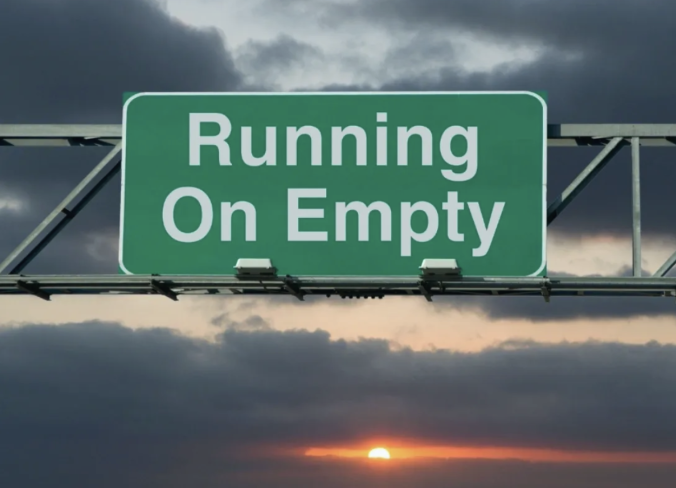
Recognizing Signs That You’re Running on Empty

Have you ever felt so exhausted that even a full night’s sleep doesn’t help? Or maybe your brain feels foggy, and even simple tasks seem overwhelming? If so, you might be running on empty—which means your body and mind are tired and need a real break.

Life can be stressful, with work, school, responsibilities, and social pressures all demanding your time and energy. But if you don’t take time to rest and recharge, your body and brain will start sending warning signs that something isn’t right.

This article will help you recognize the signs of burnout and show you simple ways to recover your energy and feel better.

What Happens When You’re Too Tired?

Your body has a built-in system that helps you handle stress and recover. But when you keep pushing yourself without rest, your system gets stuck in two states:

  1. Fight-or-flight mode – You feel anxious, restless, or stressed all the time.
  2. Shutdown mode – You feel completely drained, unmotivated, and even numb.

Instead of bouncing back after stress, your energy stays low, and even small things start feeling overwhelming.

Signs That You’re Running on Empty

If you notice these signs happening a lot, it may be time to slow down and recharge.

1. You Feel Tired All the Time

  • You wake up feeling just as exhausted as when you went to sleep.
  • Coffee or energy drinks barely help.
  • Even fun activities feel like too much effort.

2. You Can’t Think Clearly

  • You forget things easily.
  • It’s hard to focus at work or school.
  • You feel mentally “foggy” and struggle to make decisions.

3. You Feel Irritable or Overwhelmed

  • Small things make you frustrated or angry.
  • You feel more emotional than usual.
  • You get upset easily, or you feel numb and disconnected.

4. Your Sleep is Messed Up

  • You struggle to fall asleep because your mind won’t slow down.
  • You wake up a lot during the night.
  • You sleep more than usual but still feel tired.

5. Your Body Feels Tense and Stressed

  • You have frequent headaches.
  • Your muscles feel tight, especially in your neck, shoulders, or jaw.
  • You get stomachaches or digestive problems.

6. You Lose Interest in Things You Used to Enjoy

  • Your favorite hobbies seem boring.
  • You don’t feel like socializing or making plans.
  • You feel disconnected from people around you.

7. You Rely on Quick Fixes to Get Through the Day

  • You drink lots of caffeine or eat sugary snacks for energy.
  • You spend hours scrolling on your phone but don’t feel better.
  • You zone out in front of the TV instead of doing things you enjoy.

Why Ignoring These Signs is a Bad Idea

If you don’t take care of yourself, exhaustion can make things worse. It can lead to:

  • Getting sick more often
  • Struggling in school
  • Feeling sad or anxious all the time
  • Not wanting to do anything, even fun stuff

But don’t worry! If you notice these signs, there are simple ways to recharge your energy and start feeling better.

How to Get Your Energy Back

Here are some easy ways to help your body and brain feel rested:

1. Get More Sleep

  • Try going to bed at the same time every night.
  • Turn off screens (TV, phone, tablet) 30 minutes before bed.
  • Make your room dark and quiet to help you sleep better.

2. Take Breaks During the Day

  • Go outside for fresh air.
  • Stretch or move around when you feel stiff.
  • Close your eyes and take five deep breaths to calm your mind.

3. Drink Water and Eat Good Food

  • Drink water instead of soda or sugary drinks.
  • Eat healthy snacks like fruit, nuts, or yogurt.
  • Avoid too much candy or fast food—it can make you feel more tired later.

4. Move Your Body

  • Take a walk, ride a bike, or dance to your favorite song.
  • Do some stretching or yoga to relax.
  • Playing outside helps your brain and body feel refreshed.

5. Say “No” When You Need a Break

  • It’s okay to skip an activity if you’re too tired.
  • You don’t have to say “yes” to everything.
  • Let your friends and family know when you need time to rest.

6. Do Things That Make You Happy

  • Listen to music, draw, or read a book.
  • Spend time with friends who make you feel good.
  • Try a new hobby just for fun.

Conclusion

Your body and mind give you warning signs when you’re running on empty. If you’re always tired, cranky, or don’t enjoy things anymore, it’s time to slow down and take care of yourself.

The good news is, you can fix this! By sleeping better, eating healthy, moving your body, and taking breaks, you can get your energy back and feel happier.

So, listen to your body—when it says “I need a break,” give it one! 😊

References

Parker, G., Tavella, G., & Eyers, K. (2022). Burnout: A guide to identifying burnout and pathways to recovery. Taylor & Francis.

Sidebar