Licensed Psychologist | Online psychological services available across participating PSYPACT states

Tag: Work-Life Balance

What Does it Feel Like to Be Enough?

 An Economic Wellbeing reflection on work, money, and meaning

There are sessions where something feels urgent, and then there are sessions where something feels settled. Today was the latter. Nothing needed fixing, but something important was clear.

Not too long ago, work made Avery miserable. Just months into a role that was meant to be the high point of their career, Avery realized it wasn’t something they wanted to continue for the rest of their working life. So, they chose to step away. There was no immediate plan—just some time off. Along the way, they took a few consultancy work, not as part of a bigger strategy, but because they felt right in the moment.

And now, Avery talked about a possible full-time job. It might mean moving, and it pays less than what they used to earn. Yet, there was no tension in their voice. If it works out, it works out. If not, they would be okay. Before, decisions came from pressure—the need to fix, to prove, to secure something quickly. Now, they came from intention. Not busy, but active.

Avery described something different. Over the past year, they had been letting things unfold rather than forcing outcomes. And somehow, opportunities still came. In some ways, more easily. I pointed out that this was not a lack of effort. It was a shift in how effort was used. It was less about control and more about choice. This is something we often see in Acceptance and Commitment Therapy—moving forward based on values, not fear, even when the outcome is uncertain (Hayes, Strosahl, & Wilson, 1999).

We talked about how Avery works now. The schedule is flexible. The pace is different. It may not look like much from the outside, but Avery feels engaged. Clear.

That led to a distinction I often make. There is a difference between being busy and being active. Busy comes with pressure. It is often about proving something. Active is quieter. It is still effort, but it is chosen. Avery added something important. Busy feels performative.

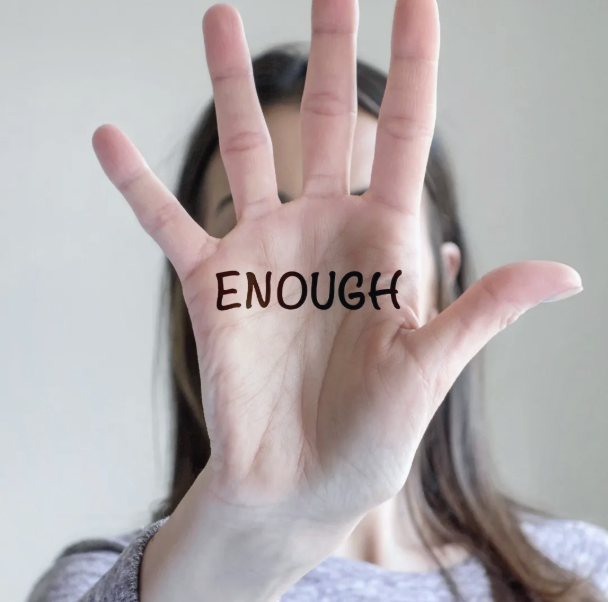
There is a belief that being tired means being valuable. That the more you do, the more you matter. But Avery stepped away from that. Their work no longer needed to be seen to feel real. It just needed to feel enough.

This lines up with what we know from self-determination theory. People feel better when their actions come from choice and meaning, not pressure (Deci & Ryan, 2000). Avery was no longer working to prove something. They were working in a way that fit.

We then talked about money. The new job pays much less. Before, that would have felt like a loss. Now, Avery said something different. They realized they do not need as much as they once thought. This was not just about money. It was about how Avery now understands economic wellbeing. It was no longer about chasing a number. It was about asking, “What supports my life?”

That shift matters. Research shows that it is not the event itself, but the meaning we give it that shapes how we feel (Seligman, 2011). A lower salary can feel like failure, or it can feel like freedom. The number stays the same. The meaning changes.

I asked Avery what they liked about the job beyond the pay. The answer came quickly—working with people, building relationships, helping others grow. As they spoke, it felt natural, almost easy. Like something they already knew about themselves.

Near the end, I reflected on what Avery said that this job’s salary offer felt like enough. It meant that they were no longer starting from a place of lack. I told them that when you already feel enough, anything more would be a bonus.

References

Deci, E. L., & Ryan, R. M. (2000). The “what” and “why” of goal pursuits: Human needs and the self-determination of behavior. Psychological Inquiry, 11(4), 227–268.

Hayes, S. C., Strosahl, K. D., & Wilson, K. G. (1999). Acceptance and commitment therapy: An experiential approach to behavior change. Guilford Press.

Seligman, M. E. P. (2011). Flourish: A visionary new understanding of happiness and well-being. Free Press.


Grazing vs. Grinding: Reexamining Productivity

Over the past few weeks, one of my patients began describing something new happening in her life—something surprisingly simple, yet deeply meaningful. She had been spending her afternoons at a pottery studio, quietly painting the pieces she had made. Afterward, she would walk around town without an agenda. Many of the shops were closed, but that didn’t matter; she wasn’t rushing anywhere.

She realized afterward that she had never taken moments like this before. Her life had been shaped by a different rhythm: constant motion, constant achievement, constant proving. She was used to equating productivity with worth and rest with laziness—a mindset shaped by childhood expectations, academic pressures, and the cultural drumbeat. But now, for the first time, she was learning that doing her best at work was enough—and that the rest of her life deserved to breathe too.

It was in that moment, listening to her describe the contrast between her past and present way of living, that I told her, “Oh, so you have been grazing and not grinding!”

The Magnetism of the Grind

The American rat race is powerful not because it is logical, but because it is everywhere. When everyone around us is chasing more—more money, more status, more validation—it becomes difficult not to join in. We compare ourselves to peers, coworkers, and strangers online, wondering whether we are doing enough or becoming enough. Social psychology has documented this extensively: conformity pressures shape our behavior even when we believe we are acting independently (Cialdini & Goldstein, 2004).

The grind becomes a default identity.

But research is clear that a life organized around relentless striving carries psychological costs. Chronic overwork and sustained performance pressure dysregulate the stress-response system, impair creativity, and erode well-being (McEwen, 1998). The grind narrows attention until life becomes a checklist of obligations.

And yet, many of us remain drawn to it—not because it brings joy, but because it brings familiarity.

Grazing: The Quiet Counterpractice

In the animal kingdom, grazing animals—horses, deer, cattle—spend hours each day roaming and feeding in a calm, grounded state. They are alert but not reactive. Unless a true predator appears, they do not mobilize into panic. Their baseline is ease, not vigilance. They are present without being pressured.

Human grazing mirrors this: it is the capacity to be in one’s environment without responding to every perceived threat, pressure, or expectation.

Neuroscience aligns with this. When the mind is allowed unstructured time, the brain’s default mode network activates—a state associated with creativity, self-reflection, emotional digestion, and meaning-making (Immordino-Yang et al., 2012). Grazing, then, is not idleness. It is cognitive restoration.

Therefore, grazing is a way of moving through life that is gentle, slow, and present. It is not the absence of ambition but the presence of perspective. Grazing is unhurried. It is the moment when someone paints pottery without worrying about whether she is “artistic enough,” or walks without a destination simply because the day feels open.

The Conditioning Behind the Grind

Many people who struggle to graze aren’t resisting leisure because they dislike it—they may have just forgotten it over what they gradually learned, that is to hustle.

For my patient, rest was equated with laziness throughout childhood. Her mother, exhausted from working multiple jobs, would come home and grow upset if she found her children resting. Productivity, in that household, was a form of moral correctness. Later, high academic expectations shaped her sense of worth—perfection was the standard, and anything less was failure. Affirmation was rare; criticism was abundant. Over time, she internalized a simple but damaging belief: my value depends on my output.

Psychology describes this as conditional self-worth, a state in which achievement becomes the primary source of identity and self-esteem (Crocker & Wolfe, 2001). Research shows that people raised in such environments tend to develop perfectionism, anxiety, and difficulty resting without guilt (Flett & Hewitt, 2022).

In adulthood, the grind feels familiar because the nervous system was trained to equate rest with danger.

Grazing Has No Rules

One of the most liberating parts of my patient’s discovery was recognizing that grazing has no rules.

Work is full of rules: templates, deadlines, expectations, outcomes. Even creative fields often turn creativity into performance. But play, as Donald Winnicott (1971) famously described, exists outside of productivity. It is spontaneous, purposeless, exploratory. It is not the opposite of work; it is the antidote to rigidity.

Grinding measures worth through outcomes.
Grazing honors worth through presence.

Grinding constricts.
Grazing expands.

When my patient sat down for pottery the second time, she noticed something remarkable—she no longer cared whether she was “artistic enough.” She simply mixed colors and followed what felt good. The result didn’t need to be extraordinary for the process to matter. And that is the essence of grazing: enjoyment without justification.

Reclaiming Our Human Graze

Grinding values efficiency. Grazing values experience.
Grinding creates identity. Grazing restores humanity.

The point is not to abandon aspirations but to rebalance the human system—allowing space for both effort and ease, both striving and slowing down. The journey is not linear; it is organic, wave-like, and unhurried. When we graze, we reconnect with the parts of ourselves that grinding silenced: curiosity, wonder, spontaneity, and play.

Life is not meant to be a marathon of self-improvement.
It is a meadow, and we are meant to graze.

References

  • Cialdini, R. B., & Goldstein, N. J. (2004). Social influence: Compliance and conformity. Annual Review of Psychology, 55, 591–621.
  • Crocker, J., & Wolfe, C. T. (2001). Contingencies of self-worth. Psychological Review, 108(3), 593–623.
  • Flett, G. L., & Hewitt, P. L. (2022). Perfectionism: A Relational Approach to Conceptualization, Assessment, and Treatment. American Psychological Association.
  • Immordino-Yang, M. H., Christodoulou, J. A., & Singh, V. (2012). Rest is not idleness: Implications of the brain’s default mode for human development and education. Perspectives on Psychological Science, 7(4), 352–364.
  • McEwen, B. S. (1998). Protective and damaging effects of stress mediators. New England Journal of Medicine, 338(3), 171–179.
  • Winnicott, D. W. (1971). Playing and Reality. London: Tavistock.

Karoshi

Recently, I watched a documentary that left a profound impression on me, shedding light on Japan’s complex state of wellbeing. It painted a picture of “two worlds” within the country. On one side, in places like Tokyo, people are hustling and bustling, seemingly in a constant fight for survival, working long hours and pushing themselves to their limits. On the other side, in regions like Okinawa, a designated Green Zone, people are living peaceful, balanced lives, with many reaching their centennial years.

In this documentary, they introduced the term Karoshi, a Japanese word that refers to the compulsive desire to work hard, even to the point of harming one’s health. This concept struck me because it closely ties to the Western culture of overwork. I felt compelled to share what I learned and bring this message to you, hoping that you will reflect on your own life, especially on your economic wellbeing.

Understanding Karoshi: The Dangers of Overworking

Karoshi, which translates to “death by overwork,” became a recognized issue in Japan as early as the 1980s. The World Health Organization (2021) has reported that overwork leads to an increased risk of heart disease and stroke. In Japan, many workers push themselves so hard that their health breaks down, a problem compounded by a cultural expectation to dedicate one’s life to work. Karoshi—the compulsive drive to work at all costs—feeds into this cycle. The more people feel pressured to prove their worth through their work, the more they sacrifice their health.

In the U.S., though we might not use the same terms, the situation is similar. The American work culture values busyness and productivity, often at the expense of personal wellbeing. According to a report by the American Institute of Stress (2021), 83% of workers in the U.S. experience significant stress related to their jobs. This mirrors the pressure seen in Tokyo and highlights a global issue of overwork.

The Contrast with Okinawa’s Green Zone

In contrast to the hustle and grind of Tokyo and similar urban centers, Okinawa offers an entirely different way of life. Okinawa is part of the world’s “Blue Zones,” places where people live exceptionally long, healthy lives. The people of Okinawa embrace balance in their daily activities, including work. They value community, health, and leisure, which helps explain why many live to be 100 years or older.

What can we learn from this? The contrast between Tokyo’s fast-paced life and Okinawa’s slower, balanced lifestyle offers a powerful lesson: a life driven by overwork is not sustainable. Karoshi are stark reminders of the cost of sacrificing wellbeing for work, whereas Okinawa shows us that focusing on balance and prioritizing health can lead to longevity and happiness.

How This Relates to Us: Economic Wellbeing and Our Choices

You may be wondering how all of this relates to your own life, especially here in America. The truth is, many of us fall into the same trap of overworking, driven by financial pressures and the cultural expectation to be constantly productive. However, the story of Karoshi reminds us that this drive can be dangerous. It’s essential to pause and reflect: Are we working so hard that we’re sacrificing our health? How can we find balance in our work lives to improve our wellbeing?

Seeking a healthier balance, both economically and personally, is key. Taking time for yourself, setting boundaries between work and personal life, and prioritizing your mental and physical health are steps we can all take to prevent burnout and stress. And remember, seeking help from a therapist or counselor when you’re feeling overwhelmed can make all the difference.

A Call to Action: Reflect on Your Wellbeing

As you reflect on your own life, consider how your work habits might be affecting your health and happiness. The lessons of Karoshi, and Okinawa’s Green Zone are clear: a life that prioritizes balance over constant busyness leads to better health and greater fulfillment. In the end, your economic wellbeing depends on more than just how hard you work—it’s about how you care for yourself, too.

If you find yourself stressed, overwhelmed, or unable to cope with the pressures of work, reach out to a mental health professional. Your wellbeing is worth investing in, and it’s never too late to make changes for a healthier, happier life.

Read more from Rizaldy R. Ferrer, Ph.D.


References

American Institute of Stress. (2021). Stress in America: Latest statistics. Retrieved from

https://www.stress.org/

Mayo Clinic. (2020). Stress management: The physical toll of chronic stress. Retrieved from https://www.mayoclinic.org/healthy-lifestyle/stress-management

Takahashi, M. (2019). Overwork-related disorders in Japan: Recent trends and development of a national policy to promote preventive measures. Industrial Health, 57(3), 245–250. https://doi.org/10.2486/indhealth.2018-0218

World Health Organization. (2021). Long working hours increasing deaths from heart disease and stroke. Retrieved from https://www.who.int/news-room

I’m Active, Not Busy!

Over 10 years ago, during a therapy session with a 12-year-old patient, I started the conversation by asking, “How are you? Have you been busy?” He paused for a moment and then replied, “No, active.” His response struck me, and it since changed the way I think about the words I choose to describe my intentions and how I go about my day.

I realized that using the word “busy” often leaves me feeling stressed and anxious, as though I’m running around without purpose—like a chicken with its head cut off. When I reflect on how people usually say they’re “busy,” it often seems to carry a sense of being overwhelmed or not in control of life’s demands. Some even wear “busy” as a badge of honor, as if juggling too many things is normal, even though they don’t actually enjoy the feeling.

This experience inspired me to continue to explore how the words we use everyday matter in the way we think and their impact on our feelings and actions. In my work as a practicing psychologist, I pay attention to individuals’ experiences associated with “feeling busy,” and suggest trying to use “active” to gain more control over their behaviors. In this article, I also explore the cultural and common idea of being “busy” in today’s world, looking at research that shows how the words we use shape our behavior, thinking, and wellbeing.

The word “busy” seems to be a common answer to the question, “How are you?” For many, being “busy” has become a way of life, almost a standard response that suggests a sense of productivity and purpose. But is this really the case? The word “busy” often implies that we are overwhelmed and constantly reacting to endless demands. It suggests a lack of control over our time and energy, and it can carry a heavy sense of stress.

The Problem with “Busy”

When people describe themselves as “busy,” they might actually be conveying that their lives feel chaotic and unmanageable. Research shows that this perception of busyness is often linked to increased stress and burnout. A study by Gordon et al. (2019) found that the language we use to talk about our daily lives, like saying we’re “busy,” is directly related to how much stress we experience. People tend to feel less in control when they frame their day-to-day tasks as overwhelming and unmanageable.

In contrast, I argue that when we think of ourselves as “active,” there’s a shift in how we approach our tasks. Being “active” suggests intention and purpose—it implies that we are engaged in our activities by choice, rather than feeling trapped by them. This shift in perspective can make a significant difference in how we experience our daily lives.

Words Shape Our Reality

The idea that language shapes how we think, and feel has long been studied in the field of psychology. According to the Sapir-Whorf Hypothesis (Whorf, 1956), the words we use influence our perception of reality. For instance, a study conducted by Boroditsky (2001) demonstrated that people who speak different languages perceive time differently based on how their language structures the concept of time. This finding shows that our words don’t just reflect our thoughts; they actively shape them.

When we repeatedly use the word “busy,” it can reinforce feelings of stress and anxiety, making it more challenging to find calm in our everyday activities. On the other hand, using a word like “active” can encourage a mindset that focuses on purposeful action and engagement, helping us feel more in control and less overwhelmed.

Changing Language, Changing Behavior

Research has also shown that changing our language can lead to changes in our behavior. Carol Dweck (2006), in her study of mindsets, found that students who used language focused on growth and learning were more resilient and willing to embrace challenges. They developed what she termed a “growth mindset,” which significantly improved their problem-solving skills and adaptability.

Applying this idea to our daily lives, when we choose to describe ourselves as “active” instead of “busy,” we might find that we approach challenges with more intention and clarity. The simple act of changing our language can help us shift from feeling overwhelmed to feeling engaged and purposeful.

The Impact on Wellbeing

Our choice of words also has a profound impact on our overall wellbeing. Studies have shown that people who regularly describe their lives as “busy” are more likely to experience negative emotions, such as anxiety and stress (Matthews & Wells, 2020). In contrast, those who describe their activities as “active” or “engaged” tend to report higher levels of satisfaction and a greater sense of accomplishment.

Killingsworth and Gilbert (2010) conducted a study revealing that people are happiest when they are fully present in their activities, regardless of how many tasks they have. This finding aligns with the idea that being “active” promotes mindfulness and focus, while being “busy” can lead to distraction and a sense of losing control over one’s life.

Conclusion

Choosing to be “active” rather than “busy” is more than just a shift in language—it’s a shift in mindset. This change can help us regain control of our lives, turning what feels like chaos into a series of purposeful actions. By reframing our tasks as part of a chosen engagement rather than overwhelming demands, we create a more balanced, intentional approach to our daily activities.

Read more from Rizaldy R. Ferrer, Ph.D.


References

Boroditsky, L. (2001). Does Language Shape Thought? Mandarin and English Speakers’ Conceptions of Time. Cognitive Psychology, 43(1), 1-22.

Dweck, C. S. (2006). Mindset: The New Psychology of Success. Random House.

Gordon, C., Montgomery, A., & Napier, S. (2019). The Language of Stress: How Words Relate to Mental Health. Journal of Applied Linguistics, 15(2), 210-227.

Killingsworth, M. A., & Gilbert, D. T. (2010). A Wandering Mind Is an Unhappy Mind. Science, 330(6006), 932.

Matthews, G., & Wells, A. (2020). Stress and Language: The Role of Everyday Expressions in Mental Health. Health Psychology Review, 14(3), 456-478.

Whorf, B. L. (1956). Language, Thought, and Reality: Selected Writings of Benjamin Lee Whorf. MIT Press.

Sidebar