Licensed Psychologist | Online psychological services available across participating PSYPACT states

Tag: Emotional Regulation

Why Self-Compassion Feels So Difficult

Many people find it easier to be compassionate toward others than toward themselves. A person may comfort a struggling friend with patience and understanding, yet respond to their own mistakes with harsh criticism. This pattern is so common that many individuals mistake self-criticism for responsibility or motivation, believing that being hard on themselves will push them to improve.

Psychologist Kristin Neff describes self-compassion as treating yourself with the same care, understanding, and humanity you would offer someone you love (Neff, 2003). Self-compassion does not mean avoiding accountability or pretending everything is fine. Instead, it involves recognizing that mistakes, setbacks, and emotional pain are part of being human. Research shows that people with higher levels of self-compassion tend to experience lower levels of anxiety, depression, and burnout while also demonstrating greater emotional resilience (Neff & Germer, 2013).

One reason self-compassion can feel uncomfortable is because many people associate softness with weakness. In cultures that emphasize productivity and achievement, gentleness toward oneself may feel undeserved unless it has been “earned” through success. However, studies suggest that chronic self-criticism activates the brain’s threat system, increasing stress responses and emotional exhaustion over time (Gilbert, 2009). Compassion, in contrast, helps activate systems associated with safety, emotional regulation, and connection.

Learning self-compassion often begins with small shifts in language. Instead of asking, “Why am I like this?” after a mistake, a person might ask, “What do I need right now?” Instead of assuming failure means inadequacy, they might recognize that struggling is part of growth. Self-compassion does not remove challenges from life, but it changes the emotional environment in which those challenges are faced. And sometimes, that softer environment is exactly what allows healing to begin.


References

Gilbert, P. (2009). The compassionate mind: A new approach to life’s challenges. New Harbinger Publications.

Neff, K. D. (2003). Self-compassion: An alternative conceptualization of a healthy attitude toward oneself. Self and Identity, 2(2), 85–101. https://doi.org/10.1080/15298860309032

Neff, K. D., & Germer, C. K. (2013). A pilot study and randomized controlled trial of the mindful self‐compassion program. Journal of Clinical Psychology, 69(1), 28–44. https://doi.org/10.1002/jclp.21923

Gilbert, P. (2009). The compassionate mind: A new approach to life’s challenges. New Harbinger Publications.

Neff, K. D. (2003). Self-compassion: An alternative conceptualization of a healthy attitude toward oneself. Self and Identity, 2(2), 85–101. https://doi.org/10.1080/15298860309032

Neff, K. D., & Germer, C. K. (2013). A pilot study and randomized controlled trial of the mindful self‐compassion program. Journal of Clinical Psychology, 69(1), 28–44. https://doi.org/10.1002/jclp.21923

The Role of Sleep in Mental Health

We often hear the phrase “get a good night’s sleep,” but sleep is more than just rest—it’s one of the most powerful foundations for mental health. Research shows that sleep and mental well-being are deeply connected, with each influencing the other in important ways.

Why Sleep Matters for Mental Health

Sleep allows the brain and body to reset. During deep stages of sleep, the brain clears waste, processes emotions, and consolidates memories. Without enough sleep, emotional regulation suffers, and people are more vulnerable to stress, anxiety, and depression (Walker, 2017).

Chronic sleep deprivation can impair focus, decision-making, and even social interactions. Over time, lack of rest can worsen existing mental health conditions, creating a cycle that’s hard to break.

The Sleep–Emotion Connection

  • Mood Regulation: Poor sleep is strongly linked with irritability, mood swings, and negative thinking patterns.
  • Anxiety and Stress: Sleep deprivation activates the amygdala—the brain’s “alarm system”—making us more reactive to stress.
  • Depression: Up to 90% of people with depression report difficulties with sleep, such as insomnia or oversleeping (Harvard Medical School, 2009).

Signs Your Sleep May Be Affecting Your Mental Health

  • You feel anxious or low in mood after several nights of poor sleep.
  • You rely on caffeine to get through the day.
  • You struggle with focus, memory, or motivation.
  • You wake up feeling unrefreshed, even after a full night in bed.

Practical Tips for Better Sleep and Mental Wellbeing

  1. Set a Routine: Go to bed and wake up at the same time each day—even weekends.
  2. Create a Sleep-Friendly Space: Keep your bedroom dark, quiet, and cool.
  3. Unplug Before Bed: Limit screen use 30–60 minutes before sleep; blue light interferes with melatonin production.
  4. Practice Relaxation: Try breathing exercises, journaling, or gentle stretches before bedtime.
  5. Limit Stimulants: Reduce caffeine or alcohol intake, especially in the afternoon or evening.
  6. Seek Support: If sleep struggles persist, a mental health professional can help identify underlying issues.

The Takeaway

Sleep isn’t just downtime—it’s an essential tool for mental resilience. By making sleep a priority, you’re investing in clearer thinking, steadier emotions, and overall well-being. Remember: good sleep is good self-care.

References

  • Harvard Medical School. (2009). Sleep and mental health. Harvard Health Publishing.
  • Walker, M. (2017). Why we sleep: Unlocking the power of sleep and dreams. Scribner.

Executive Functioning: The Brain’s “Air Traffic Control” and ADHD

Have you ever walked into a room and totally forgotten why you were there? Or started a chore, then got distracted and moved on to something else without finishing? That might sound familiar to many people—but for someone with ADHD, it happens a lot more often, and it’s usually not their fault.

This is where executive functioning comes in. Think of it as the brain’s air traffic control system—helping you plan, focus, remember, manage time, and control emotions. When this system doesn’t work well, it’s like trying to fly planes with no radar. Things can get messy, fast.

What Is Executive Functioning?

According to leading psychologist Dr. Russell Barkley, executive functions are mental skills we use every day to get things done. These include:

  • Self-awareness – noticing what we’re doing and how we’re doing.
  • Self-restraint – stopping ourselves from saying or doing things too quickly.
  • Working memory – remembering things long enough to use them.
  • Emotional regulation – handling our feelings in a healthy way.
  • Self-motivation – getting started on something, even when we don’t feel like it.
  • Planning and problem-solving – making a plan and adjusting it when needed.
  • Organization – keeping track of things and staying tidy.

All of these skills help us function at home, school, or work. When they are weak, daily life becomes much harder.

How ADHD Affects Executive Functioning

People with ADHD (Attention-Deficit/Hyperactivity Disorder) have a brain-based condition that affects executive functioning. They may struggle to stay focused, manage time, remember instructions, or hold back emotions—even when they’re really trying.

Dr. Barkley says ADHD is not just about being hyper or distracted. It’s a developmental delay in self-regulation. In other words, it’s harder for people with ADHD to stop, think, and act in ways that match their goals.

For example:

  • They might say something without thinking and regret it right away.
  • They may want to do homework, but their brain pulls them toward YouTube or gaming.
  • They may feel overwhelmed when asked to plan a big project.

These are not signs of laziness or carelessness. They are symptoms of how the ADHD brain works differently.

What Helps?

The good news is: executive functioning can improve with the right tools! Some strategies that research supports include:

  • Visual reminders and timers to stay on track.
  • Checklists to break big tasks into small steps.
  • Body movement and breaks to help reset focus.
  • Mindfulness techniques to help pause before reacting.
  • Daily planning routines to organize time and space.

Coaching, therapy, and sometimes medication can also support brain function and daily skills.

Everyone struggles with focus and planning sometimes. But for someone with ADHD, these challenges happen more often and have a bigger impact. Understanding executive functioning helps us show more support, not judgment.

With patience, practice, and support, people with ADHD can thrive—and their brains, while different, are full of creativity, ideas, and strength.

References

Barkley, R. A. (2012). Executive functions: What they are, how they work, and why they evolved. Guilford Press.

Barkley, R. A. (2020). Attention-deficit hyperactivity disorder: A handbook for diagnosis and treatment (4th ed.). Guilford Publications.

Understanding Fight, Flight, Freeze, and Fawn

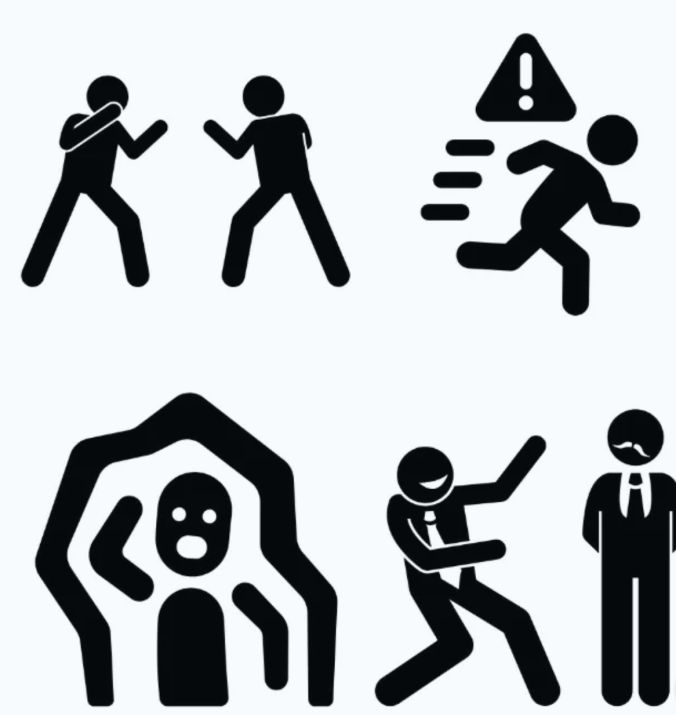
When we face stress or danger, our body reacts instinctively to protect us. These responses—known as fight, flight, freeze, and fawn—are the brain’s way of helping us survive. Each response serves a purpose, but they can also activate in non-life-threatening situations, like during arguments or overwhelming tasks.

  1. Fight: You feel the urge to confront the situation directly, whether through verbal or physical defense. This response comes with increased adrenaline and energy.
  2. Flight: You want to escape or avoid the source of stress. This could mean physically leaving or mentally withdrawing from the situation.
  3. Freeze: Your body becomes paralyzed, unable to react. This happens when the brain decides staying still might keep you safe.
  4. Fawn: You aim to please or placate others to diffuse tension. This often involves putting others’ needs above your own.

While these responses are natural, overreliance on one can lead to challenges in everyday life. Understanding your reactions is the first step toward managing stress.

Tips to Manage Stress and Regain Control:

  • Breathe Deeply: Practice slow, deep breathing to calm your nervous system. Try inhaling for 4 seconds, holding for 4 seconds, and exhaling for 4 seconds.
  • Ground Yourself: Use grounding techniques like the “5-4-3-2-1” method—name 5 things you see, 4 things you can touch, 3 you hear, 2 you smell, and 1 you taste.
  • Move Your Body: Physical activity, even a short walk, can help release pent-up tension and improve mood.
  • Journal Your Feelings: Writing down your thoughts can help you process emotions and identify triggers.
  • Practice Self-Compassion: Remind yourself that it’s okay to feel overwhelmed and seek support when needed.

“Hmm” vs. “Ugh”

Life throws curveballs—missed deadlines, unexpected weather, or even just a bad day. Our reactions to these moments can significantly impact our mental health. Most of us are familiar with the instinctive “ugh,” a reaction rooted in frustration, dismay, or rejection. But what if we replaced “ugh” with “hmm”? This small shift, from resistance to curiosity, can make a big difference in how we navigate life’s challenges.


The Science Behind “Ugh”

“Ugh” is more than just an expression—it’s a manifestation of emotional reactivity. According to Beck’s (1976) cognitive theory, such reactions may arise from distorted thinking. When things don’t go our way, our brains tend to catastrophize or overgeneralize. For instance, spilling coffee might spark an “ugh” followed by the thought, “This ruins my whole day.” This automatic negativity can increase stress and anxiety, trapping us in a cycle of frustration.

Additionally, “ugh” often reflects misperceptions. Imagine planning a beach day, only to encounter rain. The initial “ugh” assumes the trip is ruined. However, this reaction misses the potential for alternative enjoyable activities, such as visiting a local café or spending quality time indoors. By sticking to the “ugh” response, we limit our ability to adapt and find joy in the unexpected.


Why “Hmm” Matters

In contrast, “hmm” embodies curiosity and openness, encouraging us to pause, reflect, and explore. This shift can transform how we experience challenges.

  1. Reduces Negative Judgments. When we respond with “hmm,” we suspend judgment and consider alternative perspectives. Carl Rogers (1951) emphasized the importance of this openness for emotional wellbeing. Instead of thinking, “Ugh, my coworker is so rude,” curiosity might lead us to wonder, “Hmm, what might be going on with them today?”
  2. Encourages Mindfulness. Mindfulness involves staying present and observing experiences without judgment (Kabat-Zinn, 1990). Saying “hmm” instead of “ugh” keeps us grounded, reducing stress and fostering emotional regulation.
  3. Promotes Problem-Solving. The “ugh” mindset focuses on obstacles, while “hmm” seeks solutions. Research on emotion regulation by Gross (1998) shows that reframing situations leads to better outcomes. For example, when a plan falls apart, “hmm, how else can I make this work?” encourages creative thinking.
  4. Fosters Emotional Resilience. A curious approach helps us process emotions more effectively. Asking, “Hmm, why do I feel this way?” can provide insights, reducing the urge to suppress or avoid uncomfortable feelings.

How to Shift from “Ugh” to “Hmm”

Changing your default reaction takes practice, but it’s worth the effort. Here’s how to start:

  1. Notice the “Ugh”
    Pay attention to moments when you react with frustration or dismay. Simply recognizing the “ugh” is a step toward change.
  2. Pause and Reflect
    Instead of jumping to conclusions, take a deep breath and ask yourself a question beginning with “hmm.” For example:

    • “Hmm, what can I learn from this?”
    • “Hmm, how can I approach this differently?”
  1. Reframe the Situation
    Curiosity opens the door to new possibilities. Focus on what you can explore or adapt in the moment rather than dwelling on what went wrong.

Switching from “ugh” to “hmm” is a simple yet powerful tool for improving mental health. Curiosity helps us navigate life with openness and creativity, turning challenges into opportunities for growth. So, the next time life throws you a curveball, pause. Trade the “ugh” for a thoughtful “hmm,” and see how it transforms your perspective.

Read more from Rizaldy R. Ferrer, Ph.D.


References

  • Beck, A. T. (1976). Cognitive therapy and the emotional disorders. International Universities Press.
  • Gross, J. J. (1998). The emerging field of emotion regulation: An integrative review. Review of General Psychology, 2(3), 271–299.
  • Kabat-Zinn, J. (1990). Full catastrophe living: Using the wisdom of your body and mind to face stress, pain, and illness. Delacorte Press.
  • Rogers, C. R. (1951). Client-centered therapy: Its current practice, implications, and theory. Houghton Mifflin.

Anger is not good or bad. It is valid.

In this journal, I share with you a snippet of my work with Burt regarding an emotion that we, at times struggle to deal with. That is, anger. The vignette below was taken from our first psychotherapy session. I previously met him for the initial assessment where he expressed his goals. As you will notice, we delve quickly into one of his main concerns, anger management.

Burt: I just like to frame the goals again and it’s kind of like threefold. So, the first real goal I think with you, is to work on strategies to lengthen my fuse, and my overall agency. When I’m having arguments with my wife.  Yes, like so normally my temperament is like, I want to be like this very Zen, hands behind my back, just caring, thoughtful, quiet person: that’s like my ideal identity. And so, I really try to do that in my life and I think that I’m able to do that but I may be bottling up things that I don’t deal with them in the right way.  Then, you know, when I’m fighting with Susie, my wife, I’ll just all of a sudden like, explode and you know, nothing like, like bad physically…

Dr. Ferrer: You mean, aggressively.

Burt: Yeah. And I hate that, and I wish there was a way for you in that moment to say, stop. This is not how you want to handle this. You want to be gracious and do the hardest thing, which is like be kind to the person you’re angry with.

Dr. Ferrer: I hear from you the desire to be in a Zen state, but I didn’t hear an acknowledgement about the fact that emotions are emotions, pleasant or unpleasant. If you are, therefore, focused on only achieving a constant experience of calmness; then, it appears that you are denying the validity of anger.  Anger is an emotion that’s part of our human experience. Earlier, I use the word aggressively because anger and aggression are not necessarily the same. One can be angry and use that anger to go out and protest for a cause towards social justice. Then, another can be angry and loot and break windows. Those are two different things. But just same, the underlying experience is anger. I also hear that you tend to suppress your anger because you judge it as if it’s wrong. And so therefore, you haven’t been able to find ways to process the emotion well, let alone express it in a more effective way.  Instead, you said that you just bottle it up because you think it is wrong to express it until such point when it has already built up.

Burt: Yeah, no, that’s great. I, I don’t think I necessarily deny it. But you know, that could be true that my whole life, I sort of view it as some sort of weakness instead of like a healthy expression. And I guess, you know, the looting thing is a great metaphor for me when I lash out when I don’t want to. And so, um, I guess yeah, I mean, that makes sense. It would be better for me to embrace my feelings, but then find the response that I’m going to feel proud of or just feel better about.

The importance of this vignette is to demonstrate that one of the keys to behavioral change is achieving an increase in self-awareness.  Burt is aware of his explosive tendencies, but he only saw it as a weakness and dismissed the reality that anger is a vital part of human experiences.  By accepting this normal emotion, he understood that he can then learn ways to express it more effectively.

Throughout the succeeding therapy sessions, Burt shared other situations where he finds difficulty in identifying, processing and managing his anger emotion.  However, he also had begun applying the strategies we built during our meetings.  In general, this strategy included the following elements. However, this is only an example pertaining to his interaction with his wife towards the goal of reducing angry outbursts.

1. Increased awareness of various feelings throughout the day, but with particular emphasis on recognizing anger.  Anger may stem from repeated frustrations.  I posit that frustration is a reaction when we don’t get our needs met.  In the case of Burt’s argument with his wife, the need is to be heard and/or validated.  When he thought that his wife was unable to display empathy and understanding, then he got frustrated. But, he suppressed this feeling for as long as he can’t anymore. Ultimately, he exploded through mean words and a harsh tone of voice towards his wife.  One specific strategy he agreed to practice was to pause periodically, throughout the day.  For example, every hour, he paused to identify the feelings and/or emotions during the past hour he experienced.  If this included frustration or even anger, he then examined the need he had that was not met.

2. Worked on expressing his need. Rather than keeping his negative thoughts to himself, Burt started acknowledging when his point-of-views are dismissed in marital discussions.  He learned to communicate to his wife by asking for an agreed time to express his thoughts. For example, “Honey, when’s the best time to talk to you about something that is on my mind?”

3. Be prepared for the conversation. Burt kept mental bullet-points, so his agenda was in order when he had the conversation with his wife.  He expressed what he hoped an effective communication to be like and he learned to ask for his general needs in their relationship. In turn, he also asked what his wife needed from him.

The shift to an improved interaction between Burt and his wife was not overnight. Still, he reported that their fights decreased eventually.  More importantly, he recognized that having marital arguments with consequent anger at times is just part of the process of getting through communication.

Anger is not bad! It is valid. It is when one expresses anger destructively does it become unfavorable and consequential behavior. However, there are numerous ways to process anger, just like what is presented above.  It is important to break down each experience of anger and identify more effective strategies to manage it.

If you are experiencing difficulties with anger management, don’t hesitate to consult with a mental health professional and discover how you can also take better control of your emotions.

Read more from Rizaldy R. Ferrer, Ph.D.

Did You Know? The Science of Tears

When we cry—whether in sorrow, joy, or frustration—our bodies are doing more than just expressing emotion. Tears actually play a powerful biological role, helping us process feelings and manage stress. According to research, tears contain a mix of hormones, proteins, and natural pain relievers. For example, emotional tears, which are different from the kind that keeps our eyes moist, release chemicals like endorphins and oxytocin, both of which contribute to feeling calmer after a good cry (Vingerhoets, 2013).

Crying also appears to signal to others that we need support, fostering empathy and creating connections within communities. While many cultures put pressure on people to hide tears, especially in public, scientists believe that crying is a natural coping mechanism that has likely evolved for both personal relief and social bonding. As a result, letting yourself cry can be a surprisingly beneficial way to regulate emotions and improve overall well-being (Bylsma et al., 2008).

So, next time you feel the tears welling up, remember: it’s not only okay to cry—it’s also good for you.

Read more from Rizaldy R. Ferrer, Ph.D.


References

Bylsma, L. M., Vingerhoets, A. J. J. M., & Rottenberg, J. (2008). When is crying cathartic? An international study. Journal of Social and Clinical Psychology, 27(10), 1165-1187.

Vingerhoets, A. J. J. M. (2013). Why only humans weep: Unraveling the mysteries of tears. Oxford University Press.

Sidebar