Licensed Psychologist | Online psychological services available across participating PSYPACT states

Tag: Emotional Healing

The Weight of Unworthiness, and the Work of Healing

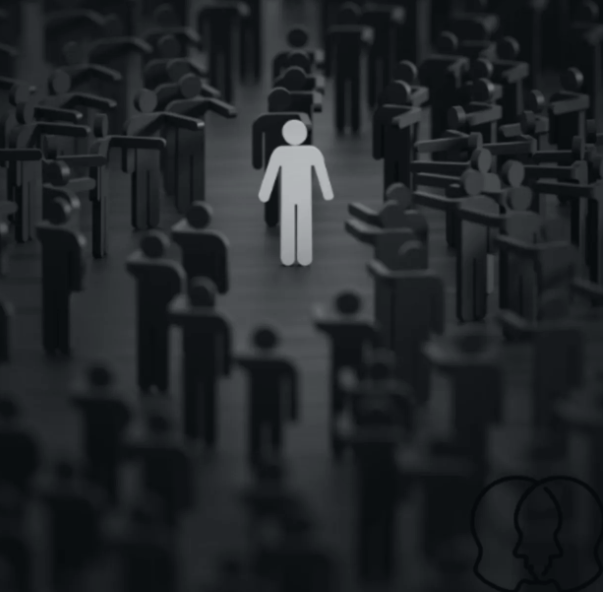
Have you ever asked yourself, “What’s wrong with me?” or thought, “I don’t deserve good things”? If so, you’re not alone. Many people, especially those going through depression or anxiety, struggle with feeling unworthy.

But where do these feelings come from? And more importantly, how can we begin to change them?

Let’s take a closer look.

What “Feeling Unworthy” Really Means

Feeling unworthy is more than just having a bad day. It’s a deep belief that you’re not good enough—not smart enough, lovable enough, successful enough, or simply not enough.

Psychologists call this low self-concept clarity—it means you’re unsure of who you are and what makes you valuable (Campbell et al., 2003). When this happens, it’s easy to doubt your worth, compare yourself to others, or feel like you’re constantly falling behind.

Where These Feelings Often Come From

People who feel unworthy usually don’t just wake up one day and feel that way. These thoughts often start early and build over time. Based on research and what people share in therapy, here are some common reasons:

  • You were criticized or ignored as a child
    (“I only got attention when I messed up.”)
  • You had to care for others before yourself
    (“My feelings didn’t matter.”)
  • You were only praised for achievements
    (“If I wasn’t perfect, I felt like a failure.”)
  • You were bullied or rejected
    (“Others made me feel small.”)
  • You compare yourself constantly
    (“Everyone else seems to be doing better than me.”)
  • You experienced trauma or abuse
    (“I thought I caused it… I must be bad.”)

These experiences can shape the way we think about ourselves—even long after they’re over (Brown, 2006; Herman, 1992).

You Can Start Rebuilding Your Worth—One Day at a Time

The good news? You can begin healing—not all at once, but with small steps. Here are simple, daily activities (5–15 minutes) that can help rebuild your sense of worth.

1. Say Something Kind to Yourself in the Mirror (5 min)

Look yourself in the eye and say one true, positive thing.
Example: “I’m doing my best, and that counts.”
This builds self-compassion, which helps reduce shame and social anxiety (Neff & Vonk, 2009).

2. Write a Short “I Am” List (5 min)

Each day, write 3 words that describe you right now.
Example: “I am tired, thoughtful, and trying.”
This helps increase self-concept clarity—knowing and accepting who you are (Campbell et al., 2003).

3. Practice a Brave Choice (5–10 min)

Speak up in a group, share your opinion, or say no when needed.
These “small brave acts” help rebuild confidence, especially in social situations (Clark & Wells, 1995).

4. Reach Out to Someone (10 min)

Text someone and say: “Can I share something I’ve been thinking about?”
Even one real connection a day can reduce loneliness and build self-worth (APA, 2019).

5. Take a Quiet Walk Alone (15 min)

Leave your phone. Pay attention to your steps, your breath, and your surroundings.
This helps you feel grounded and notice your own presence—a key part of developing identity.

6. Affirm What You Value (5 min)

Write one sentence each day:
“Today, I lived out my value of ____ by doing ____.”
Living by your values gives your life direction—and boosts your self-trust (Creswell et al., 2005).

You’re Not a Problem to Fix—You’re a Person to Care For

Healing doesn’t mean becoming a “perfect” person. It means becoming a person who can say, “I’m allowed to take up space.”

You are not broken—you’re becoming.

References 

American Psychological Association. (2019). Relationships and self-esteem: How they grow together. https://www.apa.org/news/press/releases/2019/09/relationships-self-esteem

Brown, B. (2006). Shame resilience theory: A grounded theory study on women and shame. Families in Society, 87(1), 43–52. https://doi.org/10.1606/1044-3894.3483

Campbell, J. D., Trapnell, P. D., Heine, S. J., Katz, I. M., Lavallee, L. F., & Lehman, D. R. (2003). Self-concept clarity: Measurement, personality correlates, and cultural boundaries. Journal of Personality and Social Psychology, 85(5), 895–908. https://doi.org/10.1037/0022-3514.85.5.895

Clark, D. M., & Wells, A. (1995). A cognitive model of social phobia. In R.G. Heimberg et al. (Eds.), Social phobia: Diagnosis, assessment, and treatment (pp. 69–93). Guilford Press.

Creswell, J. D., et al. (2005). Affirmation of personal values buffers neuroendocrine and psychological stress responses. Psychological Science, 16(11), 846–851. https://doi.org/10.1111/j.1467-9280.2005.01624.x

Herman, J. L. (1992). Trauma and recovery. Basic Books.

Neff, K. D., & Vonk, R. (2009). Self-compassion versus global self-esteem: Two different ways of relating to oneself. Journal of Personality, 77(1), 23–50. https://doi.org/10.1111/j.1467-6494.2008.00537.x


Pain is Inevitable, but Suffering is a Choice

We inevitably encounter painful experiences in life—breakups, humiliation, rejection, failure, and various stressors that challenge our mental and emotional well-being. These events can be understood as emotional or psychological pain, similar to the way physical injuries or diseases cause pain or discomfort to our bodies. Just as physical pain is a natural response to injury, emotional pain is a response to the mental and emotional “injuries” we face. However, while physical pain tends to subside with time or treatment, emotional pain may linger, even after the original cause has passed.

The key distinction I argue in this philosophy is the difference between pain and suffering. Pain is the initial emotional response to life’s inevitable hardships. It is unavoidable, much like the pain of a physical injury. But suffering—the prolonged and often deepened emotional distress we experience long after the event—is something we contribute to and, to a degree, choose.

Let’s consider physical pain as a metaphor. When you suffer an injury, the body’s natural healing processes often take over. A cut heals, a bruise fades, and with proper care, most physical wounds resolve. While the pain of the injury can be intense, it is typically temporary. Likewise, emotional pain from rejection, failure, or humiliation also has a natural course. Initially, it hurts, but in many cases, it, too, can fade over time, especially when we allow ourselves to process it healthily.

However, unlike physical pain, emotional pain can evolve into something more persistent—suffering. Suffering is what happens when we continue to hold on to the pain through the narratives we create in our minds. These narratives often revolve around self-blame, shame, and negative self-evaluation. We begin to revisit the painful experience repeatedly, analyzing it, assigning personal fault, and questioning our self-worth. Over time, this pattern transforms the pain into suffering.

The original emotional pain—the rejection, the failure—has ended. What sustains the suffering now is not the event itself, but the stories we tell ourselves about that event. For example, after a rejection, we might internalize the belief, “I’m not good enough” or “I’ll always fail.” This self-blame and shame become a feedback loop, feeding the suffering and allowing it to persist far beyond the original pain.

Below is an excerpt of the therapy session I had to illustrate one example of how I applied this philosophy.

Brandi: I kind of lose control when things get off track. Over the weekend, my friend was celebrating her 30th birthday. I wasn’t going to go because of my upcoming surgery, but then I changed my mind. I wanted to be there for her since I heard she was upset that people were dropping out. So I went, even though I was worried about getting sick. And indeed, I believe I caught COVID from being there. I was really kicking myself for it—blaming myself. I should’ve been more careful since I knew surgery was coming up. But my first instinct was to take care of others. I didn’t think about isolating or protecting myself.

Dr. Ferrer: Many people, including you, go to that place of self-blame. The difference is, for you, it’s harder to get out of that loop. Pain is inevitable, but suffering is a choice. The pain there, of course, is the disappointment that your surgery is canceled because you need to be well to undergo the procedure. However, you stay in the suffering longer than necessary. That is, creating a narrative that shames you.

Brandi: Yeah, it’s like a Buddhist principle. I get stuck in it, even though I know logically there’s nothing I can do about it now. It already happened. There’s another surgery date, but I keep wallowing in the “I should’ve done this differently” mindset.

Dr. Ferrer: Think about how you treat your own kids when they’re in pain. Do you immediately tell them, “See, I told you so.” Of course not. There’s no difference in how you should treat yourself. You can give that same care to yourself, but instead, you revert to shame and blame. Pain is already that feeling let down when you realize that taking care of your friend by being present in her celebration may have caused you to catch a virus. It is something you cannot change anymore. But by responding to that pain with the negative narrative is that suffering you are choosing.

Brandi: It’s easy to tell myself I’m a failure. I beat myself up. I forgot to take care of myself when I should’ve. It’s simply hard to just stay in pain and not suffering. I was crying hard that Monday, and my partner didn’t know how to help. I think she was trying by keeping her distance because I was irritable, which is also a trigger for her. I was upset with myself, feeling like a failure for not thinking about protecting myself before the surgery.

Dr. Ferrer: And that’s where the spiral starts.

Brandi: Exactly. Then my daughter came downstairs and saw me crying. She was supposed to watch a movie, but my partner told her I wasn’t up for it. She got upset. I felt like I had to pull myself together because she needed me. So, I went to the bathroom, blew my nose, and told myself, “You have to get up. She’s a kid, she needs help.”

I took a walk with the dog, trying to comfort myself. But it felt like a battle—the mental loop was still there.

Dr. Ferrer: I hear you. And yet, you found a way to comfort yourself. That’s important. You recognized you needed to carry on, even though you were still in pain. In a way, you dealt with the pain but chose not to suffer by doing your best.

Brandi: Yeah, I told my partner what was going on in my head. I explained that when things like this happen, I spiral and beat myself up. But even though I was still struggling, I could see the loop and work through it.

Dr. Ferrer: You’re recognizing it now, which is a big step. The fact that you didn’t get stuck in the negative loop as long as you used to previously is progress. You’re shortening the duration of those spirals.

Brandi: Yeah, I can see that. It took a while, but I managed to pull myself out of it faster than I would’ve in the past. The next day, I called the surgeon’s office, and they postponed the surgery for 30 days. I felt nervous, but I answered the call, which felt like a victory in itself.

In essence, while pain is an inevitable part of life, suffering is something we often create and sustain through our own narratives of self-blame and shame. The distinction lies in our response: while pain arises naturally from difficult experiences, suffering is the result of holding on to and feeding that pain with negative thoughts. By recognizing this, we can choose to let go of the stories that perpetuate suffering and allow ourselves to heal emotionally, just as our bodies naturally heal from physical wounds. Ultimately, though we cannot avoid pain, we can decide whether or not to suffer.

Read more from Rizaldy R. Ferrer, Ph.D.


Disclaimer:
The information provided in this newsletter is not intended to be a substitute for professional medical or mental health advice. If you are experiencing any mental health issues, please seek professional help. The author of this blog is not liable for any damages or injuries that may result from the use of the information provided here.

When applicable, the names, gender identification, location and/or other identifiable characteristics have been modified to maintain privacy and confidentiality; whilst, still maintaining the integrity of their stories and narratives.

Sidebar