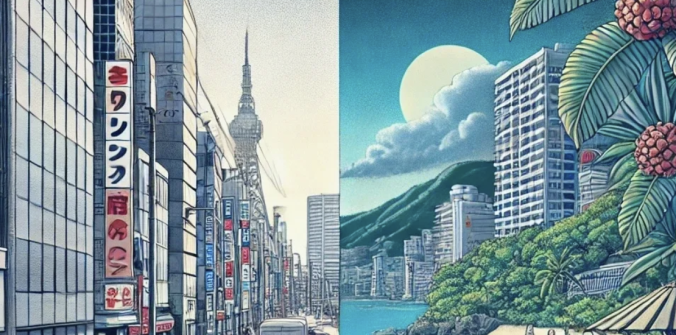
Recently, I watched a documentary that left a profound impression on me, shedding light on Japan’s complex state of wellbeing. It painted a picture of “two worlds” within the country. On one side, in places like Tokyo, people are hustling and bustling, seemingly in a constant fight for survival, working long hours and pushing themselves to their limits. On the other side, in regions like Okinawa, a designated Green Zone, people are living peaceful, balanced lives, with many reaching their centennial years.
In this documentary, they introduced the term Karoshi, a Japanese word that refers to the compulsive desire to work hard, even to the point of harming one’s health. This concept struck me because it closely ties to the Western culture of overwork. I felt compelled to share what I learned and bring this message to you, hoping that you will reflect on your own life, especially on your economic wellbeing.
Understanding Karoshi: The Dangers of Overworking
Karoshi, which translates to “death by overwork,” became a recognized issue in Japan as early as the 1980s. The World Health Organization (2021) has reported that overwork leads to an increased risk of heart disease and stroke. In Japan, many workers push themselves so hard that their health breaks down, a problem compounded by a cultural expectation to dedicate one’s life to work. Karoshi—the compulsive drive to work at all costs—feeds into this cycle. The more people feel pressured to prove their worth through their work, the more they sacrifice their health.
In the U.S., though we might not use the same terms, the situation is similar. The American work culture values busyness and productivity, often at the expense of personal wellbeing. According to a report by the American Institute of Stress (2021), 83% of workers in the U.S. experience significant stress related to their jobs. This mirrors the pressure seen in Tokyo and highlights a global issue of overwork.
The Contrast with Okinawa’s Green Zone
In contrast to the hustle and grind of Tokyo and similar urban centers, Okinawa offers an entirely different way of life. Okinawa is part of the world’s “Blue Zones,” places where people live exceptionally long, healthy lives. The people of Okinawa embrace balance in their daily activities, including work. They value community, health, and leisure, which helps explain why many live to be 100 years or older.
What can we learn from this? The contrast between Tokyo’s fast-paced life and Okinawa’s slower, balanced lifestyle offers a powerful lesson: a life driven by overwork is not sustainable. Karoshi are stark reminders of the cost of sacrificing wellbeing for work, whereas Okinawa shows us that focusing on balance and prioritizing health can lead to longevity and happiness.
How This Relates to Us: Economic Wellbeing and Our Choices
You may be wondering how all of this relates to your own life, especially here in America. The truth is, many of us fall into the same trap of overworking, driven by financial pressures and the cultural expectation to be constantly productive. However, the story of Karoshi reminds us that this drive can be dangerous. It’s essential to pause and reflect: Are we working so hard that we’re sacrificing our health? How can we find balance in our work lives to improve our wellbeing?
Seeking a healthier balance, both economically and personally, is key. Taking time for yourself, setting boundaries between work and personal life, and prioritizing your mental and physical health are steps we can all take to prevent burnout and stress. And remember, seeking help from a therapist or counselor when you’re feeling overwhelmed can make all the difference.
A Call to Action: Reflect on Your Wellbeing
As you reflect on your own life, consider how your work habits might be affecting your health and happiness. The lessons of Karoshi, and Okinawa’s Green Zone are clear: a life that prioritizes balance over constant busyness leads to better health and greater fulfillment. In the end, your economic wellbeing depends on more than just how hard you work—it’s about how you care for yourself, too.
If you find yourself stressed, overwhelmed, or unable to cope with the pressures of work, reach out to a mental health professional. Your wellbeing is worth investing in, and it’s never too late to make changes for a healthier, happier life.
Read more from Rizaldy R. Ferrer, Ph.D.
References
American Institute of Stress. (2021). Stress in America: Latest statistics. Retrieved from
Mayo Clinic. (2020). Stress management: The physical toll of chronic stress. Retrieved from https://www.mayoclinic.org/healthy-lifestyle/stress-management
Takahashi, M. (2019). Overwork-related disorders in Japan: Recent trends and development of a national policy to promote preventive measures. Industrial Health, 57(3), 245–250. https://doi.org/10.2486/indhealth.2018-0218
World Health Organization. (2021). Long working hours increasing deaths from heart disease and stroke. Retrieved from https://www.who.int/news-room
