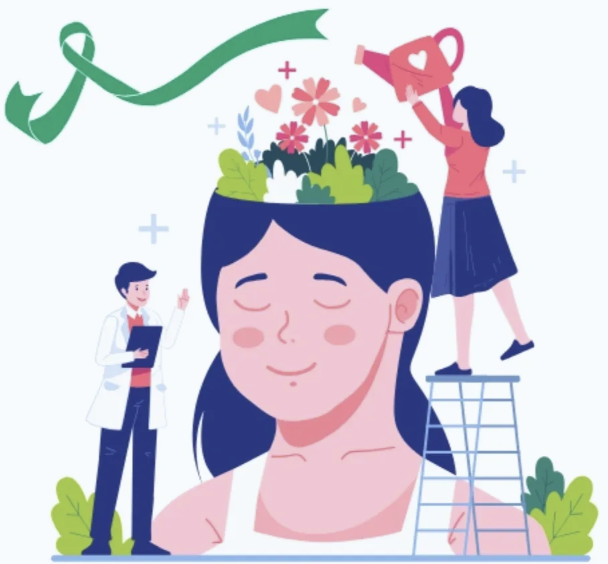
September is more than the transition from summer to fall. It’s a month dedicated worldwide to two deeply important themes in mental health: Suicide Prevention Awareness and Recovery Awareness. Both serve as reminders that mental health touches every one of us—directly or indirectly—and that hope and healing are possible.
Changing the Narrative on Suicide
The conversation around suicide has long carried stigma and silence. Yet research shows that open, compassionate dialogue is protective. When individuals feel seen and heard, their risk decreases (Chu et al., 2017). This year’s international theme, “Changing the Narrative on Suicide,” emphasizes shifting the focus from fear and judgment to understanding and support.
Too often, suicide is discussed only after a tragedy. Prevention means building everyday cultures of care where emotional struggles are normalized, not hidden. Friends, coworkers, and family members don’t need to have all the answers—they simply need to show up. Even small gestures, like checking in with a text or asking “How are you, really?” can communicate value and belonging.
Importantly, suicide prevention should never single out or spotlight individuals as “at risk” in a way that isolates them. Instead, it reframes the responsibility as collective. Just as public health campaigns around seatbelts or smoking reduced harm through shared action, shifting narratives around suicide can foster widespread resilience and safety.
Recovery Is Real
Alongside prevention, September also marks National Recovery Month. The 2025 theme, “Recovery is REAL: Restoring Every Aspect of Life,” reminds us that recovery from substance use or mental health challenges is not only possible but common.
Recovery is multidimensional. It’s not only about abstaining from substances or managing symptoms—it’s about reclaiming identity, purpose, and relationships. Research highlights that connection to supportive communities significantly improves recovery outcomes (Best & Laudet, 2010). Employment opportunities, creative expression, spirituality, and physical health are equally vital to the journey.
Recovery is not linear. It includes setbacks, restarts, and unexpected detours. But each step forward is proof that change is real. As one study notes, relapses are not failures but often turning points toward stronger long-term stability (Kelly & Greene, 2014). Celebrating progress—rather than perfection—can keep hope alive.
What We Can Do Together
- Listen without fixing. Offering presence and non-judgmental listening often matters more than immediate solutions.
- Normalize help-seeking. Just as we wouldn’t hesitate to see a doctor for chest pain, reaching out for emotional pain should be seen as strength.
- Create safe spaces. Workplaces, schools, and community groups can model openness by incorporating mental health check-ins, resource posters, and staff training.
- Share resources. Knowing where to turn in moments of crisis can make all the difference.
Resources for Support
- 988 Suicide & Crisis Lifeline (U.S.) – Call or text 988 anytime.
- SAMHSA Helpline – 1-800-662-HELP (4357) for mental health and substance use support.
- National Alliance on Mental Illness (NAMI) – nami.org for education, support groups, and advocacy.
Final Note
September invites us not to turn the spotlight on vulnerability, but to widen the circle of compassion. By changing the way we speak about suicide, and by celebrating stories of recovery, we remind ourselves and others that no one is alone in this journey. Hope is not abstract—it is lived, shared, and real.
References
Best, D., & Laudet, A. (2010). The potential of recovery capital. RSA Projects. https://www.thersa.org/globalassets/pdfs/reports/mental-health-and-recovery-report.pdf
Chu, C., Buchman-Schmitt, J. M., Stanley, I. H., Hom, M. A., Tucker, R. P., Hagan, C. R., Rogers, M. L., Podlogar, M. C., Chiurliza, B., & Joiner, T. E. (2017). The interpersonal theory of suicide: A systematic review and meta-analysis of a decade of cross-national research. Psychological Bulletin, 143(12), 1313–1345. https://doi.org/10.1037/bul0000123
Kelly, J. F., & Greene, M. C. (2014). Where there’s a will there’s a way: A longitudinal investigation of the interplay between recovery motivation and self-efficacy in predicting treatment outcome. Psychology of Addictive Behaviors, 28(3), 928–934. https://doi.org/10.1037/a0034727
Substance Abuse and Mental Health Services Administration. (2020). Treatment and recovery. U.S. Department of Health and Human Services. https://www.samhsa.gov