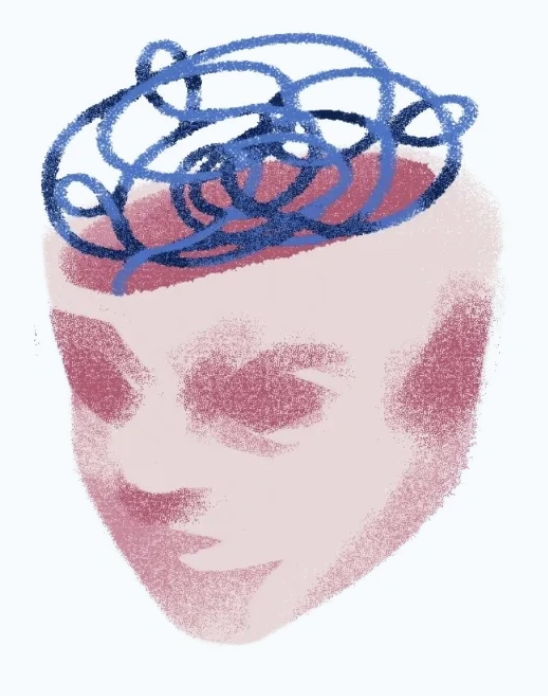
Overthinking and decision paralysis happen when certain parts of the brain become too active, especially the prefrontal cortex, amygdala, and basal ganglia. The prefrontal cortex helps with thinking and decision-making, but when there are too many choices, it gets overwhelmed, making decisions harder. The amygdala, which controls emotions, becomes too active under stress, making people feel anxious and unsure. Scientists found that people who overthink have extra activity in the dorsolateral prefrontal cortex (DLPFC), which helps with memory and planning (Gillett & Glannon, 2023). This overactivity creates a loop—more stress leads to more overthinking, making choices even more difficult.
Another part of the brain, the basal ganglia, helps with habits and making choices. If it doesn’t work properly, people struggle to take action (Brahmacari, 2018). The anterior cingulate cortex, which helps solve conflicts and spot mistakes, can become overactive, making people second-guess their decisions (Chachane & Jagtap, 2024). But there is good news—scientists say the brain can change and adapt. Mindfulness, neurofeedback, and simple mental exercises can help people break free from overthinking (Capanna-Hodge, 2024).
Ways to Stop Overthinking and Make Decisions Faster
- Use the “5-Second Rule” – If you feel stuck, count 5-4-3-2-1 and make a small move toward a decision. This helps stop hesitation.
- Set a Time Limit – Give yourself a set time to decide (e.g., “I will choose in 10 minutes”). This prevents endless thinking.
- Limit Choices – Too many options create stress. Narrow choices to two or three for easier decisions.
- Use Pros and Cons, Then Trust Your Gut – Write a simple list, but also listen to how you feel about the choice.
- Take Action Quickly – Even a small step in one direction helps break decision paralysis. Action builds confidence.
- Try Deep Breathing or Mindfulness – Breathing slowly calms the amygdala, reducing anxiety and helping clear your mind.
- Ask: “Will this matter in 5 years?” – This helps you see if a decision is really important or just feels urgent.
- Accept That No Choice is Perfect – Every decision has risks, but moving forward is better than staying stuck.
These simple strategies help the brain stay balanced, reduce stress, and make decisions with more confidence.
References
Brahmacari, D. (2018). Navigating the shadows of society modern woes: Insights and solutions. SSRN. Retrieved from https://papers.ssrn.com/sol3/papers.cfm?abstract_id=4808110
Capanna-Hodge, R. (2024). Neurofeedback for OCD: Overcoming compulsiveness. Retrieved from https://drroseann.com/neurofeedback-for-ocd/
Chachane, L., & Jagtap, S. (2024). Assisting overthinkers to reframe cognitive processes. Journal of Engineering. Retrieved from https://search.ebscohost.com/login.aspx?direct=true&profile=ehost&scope=site&authtype=crawler&jrnl=23492473&AN=177982964
Gillett, G., & Glannon, W. (2023). Neurodynamics and adaptive behaviour. Springer. Retrieved from https://link.springer.com/chapter/10.1007/978-3-031-44951-2_2
