Licensed Psychologist | Online psychological services available across participating PSYPACT states

Category: Stress & Anxiety (Page 1 of 2)

Others’ Emotions Are Not Yours to Carry

Loving someone doesn’t require carrying what belongs to them. 

Luisa cried the entire drive home. There had been no argument in the car. No dramatic scene. Just silence. Her husband stared out the window while she tried to make sense of what had just happened. The medical appointment had left them with more questions than answers. He had become frustrated with the physician, raised his voice, and directed much of that frustration toward the people trying to help him. By the time they reached home, Luisa found herself wondering if this was what the rest of their lives would look like.

Over the previous several months, life had changed quickly. Her husband was undergoing a series of medical evaluations after concerning test results, including changes found on brain imaging and laboratory findings that required additional procedures. More unsettling than the uncertainty itself was that his personality seemed to be changing. The man she had known for decades was becoming increasingly impatient, easily irritated, and at times uncharacteristically angry. Alongside all of this, Luisa found herself coordinating appointments, helping with legal and financial planning, supporting her adult children and grandchildren, keeping the household running, and quietly preparing for a future she wasn’t sure she was ready to imagine.

She loved him deeply. That wasn’t the question. The question was how to love someone who was suffering without slowly disappearing yourself.

As she described the appointment, she wasn’t angry that he was upset. She understood why he was upset. Anyone facing uncertainty about their health would likely experience fear, frustration, and grief. What hurt her was something different.

“He keeps taking it out on me.”

I told her something that might have sounded contradictory at first.

“You can express your anger, but it doesn’t have to be hurtful.” Those two ideas are often mistaken for one another. Pain and hurt are not the same thing. Fear and hostility are not the same thing. Grief and cruelty are not the same thing.

We often excuse hurtful behavior because we understand where it comes from. While understanding another person’s suffering can foster compassion, it does not require us to become the target of that suffering.

As we continued talking, another realization began to emerge. Luisa wasn’t only trying to help her husband through his illness. She was unconsciously carrying his emotional experience as though it had become her responsibility. She felt responsible for calming him. Responsible for anticipating his reactions. Responsible for protecting the family from his frustration. Responsible for making each medical appointment go smoothly. Responsible for holding everything together. That is an incredibly heavy burden for one person to carry.

Pauline Boss (1999) describes a form of grief known as ambiguous loss, in which someone is physically present but gradually changing in ways that leave loved ones feeling as though they are losing the person before them. Throughout our conversation, Luisa repeatedly described her husband’s behavior as “not him.” That simple phrase captured a grief many caregivers quietly experience. The person they love is still there, yet something about the relationship has already begun to change.

But another psychological process was happening alongside that grief. Family systems theorist Murray Bowen (1978) proposed that emotions naturally move through relationships. Anxiety rarely stays contained within one person. It spreads through couples, families, and entire systems. When one person becomes overwhelmed, others often begin carrying that emotional weight as well. Healthy relationships are not free from this influence, but they do require what Bowen called differentiation of self—the ability to remain emotionally connected without becoming emotionally fused. That was exactly what Luisa was struggling to do. She didn’t want to stop caring. She wanted to stop drowning.

At one point, she told me that when her husband became overwhelmed, she would often walk away for a while. She wasn’t abandoning him. She simply knew that if she stayed in the middle of the escalating emotion, she would eventually lose herself too.

I told her that I actually thought she was discovering something important. There is a difference between disengaging from conflict and disengaging from the person. Sometimes stepping away from an emotional storm is exactly what allows us to return with compassion instead of resentment.

As the session continued, something else caught my attention. Even after describing one of the most emotionally exhausting weeks she had experienced in a long time, Luisa talked about folding laundry for her grandchildren, cleaning the house, preparing meals, watching movies with her husband, and spending time with her children. She wasn’t doing these things because someone demanded them. She described them as things that helped her feel grounded—as small acts that reminded her life was still hers to live. That distinction mattered.

There is an important difference between doing something because life is controlling you and doing something because you are intentionally choosing how you want to live within difficult circumstances.

Research on emotional contagion has shown that emotions naturally spread between people who are closely connected (Hatfield, Cacioppo, & Rapson, 1994). We often absorb another person’s fear, sadness, or anger without even realizing it. Recognizing this tendency is not about becoming emotionally distant. It is about becoming emotionally aware. Awareness gives us the opportunity to pause before another person’s emotional state quietly becomes our own.

Near the end of our conversation, I found myself reflecting on something I often observe in therapy. Many people believe that loving someone means carrying whatever they are carrying. If they are anxious, we become anxious. If they are angry, we become angry. If they are overwhelmed, we convince ourselves we should be overwhelmed too. But perhaps love asks something different.

Perhaps love asks us to remain close enough that another person never has to suffer alone, while remaining grounded enough that neither of us loses ourselves in the process.

Witnessing someone’s pain does not mean making it your own. Supporting someone does not mean absorbing their emotional world. Others’ emotions are not yours to carry. Sometimes the greatest gift we can offer another person is not that we carry their burden for them. It is that we remain steady enough to help carry them through it.

References

Boss, P. (1999). Ambiguous loss: Learning to live with unresolved grief. Harvard University Press.

Bowen, M. (1978). Family therapy in clinical practice. Jason Aronson.

Hatfield, E., Cacioppo, J. T., & Rapson, R. L. (1994). Emotional contagion. Cambridge University Press.


The Night We Try Too Hard

“Just shut up.” That’s what he told himself the night before. He said it out loud, lying in bed, staring into the dark. “I don’t have to think about this right now. I can think about it tomorrow.” But the mind didn’t stop.

Mark is almost 50 and has always been a good sleeper. He told me that sleep was never really an issue for most of his life—maybe a few short periods here and there, but nothing that lasted. This time was different. It had been going on for over a year now, and recently, it had become almost every night.

He said he went to bed around ten. Still awake at two. Got up, read for a bit, started to feel sleepy again, went back to bed—and then it started all over. “The mind is just… twirling,” he said. “It just keeps going.”

I asked what the thoughts were about.

He paused for a moment, then said something that shifted the direction of the session.“It’s not even like I’m worrying,” he said. “I’m just… going back over my life. Thinking about people. Remembering things.” There was no urgency in the content. No clear problem to solve. Just a stream of memories, one leading to another. “And I don’t really have anyone to share those things with anymore,” he added.

What he was describing didn’t sound like a problem to fix. It sounded like something trying to be expressed. I told him something I’ve come to believe more over time—that we are, in many ways, life tellers. We carry experiences, moments, conversations, people. During the day, we share pieces of those without thinking much about it. But at night, when there’s no one to tell them to, they don’t disappear.

“I never thought of it that way,” he said. But even as we talked about that, something else was happening. The frustration wasn’t just about the thoughts anymore. It was about the sleep. “It’s become a thing now,” he said. “Like, I’m already thinking—what’s it going to be tonight?”

That shift matters. Because at that point, the problem is no longer just what’s on your mind. The problem becomes the experience of not sleeping. I reflected that this sounded similar to what we see in panic. It’s often not the first episode that keeps the cycle going—it’s the fear of it happening again. The same pattern can happen with sleep. The more we try to make it happen, the more we notice when it doesn’t. And the more we try. And the more it doesn’t.

He nodded. “Yeah… that sounds right.”

We talked about the things he had already been trying. Reading before bed. Changing routines. Getting up when he couldn’t sleep. Even wondering if he needed to change what he was doing altogether. All reasonable. All familiar. And yet, something about it felt like it was adding more pressure. So I said something that might have sounded unexpected. “I don’t want to fix your sleep.” He looked at me for a second. I clarified. “What I mean is—I’m not trying to give you something that will make you sleep better. I’m more interested in what you can create.”

We talked about small things. Movement during the day. Gentle activity that fits his body. Maybe exploring something like seated exercises or tai chi. Paying attention to what he eats, not as restriction, but as awareness. But I was careful to say this clearly. “These are not things you do so you can sleep.” He smiled a little. “That’s different.” Instead, I said, these are things you create because they add to your life. They support your wellbeing. And if sleep improves, then that becomes an outcome—not the goal.

He paused, then said, “So instead of thinking, ‘This will help me sleep,’ I could think, ‘This will feel good to do.’”

“Yes,” I said. “Exactly.” That shift may seem small, but it changes the direction entirely. Because when the goal is to fix sleep, everything becomes a test. Did it work? Did I sleep? Why didn’t it work? What do I try next? But when the goal is to create a life that feels more whole, the pressure lifts.

In research, we see that the more effort people put into trying to control sleep, the more alert they can become. The mind starts monitoring, checking, staying on guard (Harvey, 2002). And approaches that move toward acceptance—allowing the night to be what it is—often begin to ease that cycle (Ong et al., 2012).

Sleep doesn’t respond well to pressure. It doesn’t come because we demand it. It comes when the conditions allow it.

Toward the end of the session, he said something quietly. “I think I’ve been trying too hard.” I didn’t disagree.

As I thought about it later, it struck me how often this happens—not just with sleep, but with many things we struggle with. The more we try to fix what feels broken, the more attention we give to what’s wrong. And sometimes, that’s the very thing that keeps it going. Sleep, in that way, is different. It’s not something we force. It’s something we allow. And sometimes, it returns not when we finally find the right solution—but when we stop trying so hard to solve it.

References

Harvey, A. G. (2002). A cognitive model of insomnia. Behaviour Research and Therapy, 40(8), 869–893.

Ong, J. C., Ulmer, C. S., & Manber, R. (2012). Improving sleep with mindfulness and acceptance: A metacognitive model of insomnia. Behaviour Research and Therapy, 50(11), 651–660.re are sessions where something feels urgent, and then there are sessions where something feels settled. Today was the latter. Nothing needed fixing, but something important was clear.

Not too long ago, work made Avery miserable. Just months into a role that was meant to be the high point of their career, Avery realized it wasn’t something they wanted to continue for the rest of their working life. So, they chose to step away. There was no immediate plan—just some time off. Along the way, they took a few consultancy work, not as part of a bigger strategy, but because they felt right in the moment.

And now, Avery talked about a possible full-time job. It might mean moving, and it pays less than what they used to earn. Yet, there was no tension in their voice. If it works out, it works out. If not, they would be okay. Before, decisions came from pressure—the need to fix, to prove, to secure something quickly. Now, they came from intention. Not busy, but active.

Avery described something different. Over the past year, they had been letting things unfold rather than forcing outcomes. And somehow, opportunities still came. In some ways, more easily. I pointed out that this was not a lack of effort. It was a shift in how effort was used. It was less about control and more about choice. This is something we often see in Acceptance and Commitment Therapy—moving forward based on values, not fear, even when the outcome is uncertain (Hayes, Strosahl, & Wilson, 1999).

We talked about how Avery works now. The schedule is flexible. The pace is different. It may not look like much from the outside, but Avery feels engaged. Clear.

That led to a distinction I often make. There is a difference between being busy and being active. Busy comes with pressure. It is often about proving something. Active is quieter. It is still effort, but it is chosen. Avery added something important. Busy feels performative.

There is a belief that being tired means being valuable. That the more you do, the more you matter. But Avery stepped away from that. Their work no longer needed to be seen to feel real. It just needed to feel enough.

This lines up with what we know from self-determination theory. People feel better when their actions come from choice and meaning, not pressure (Deci & Ryan, 2000). Avery was no longer working to prove something. They were working in a way that fit.

We then talked about money. The new job pays much less. Before, that would have felt like a loss. Now, Avery said something different. They realized they do not need as much as they once thought. This was not just about money. It was about how Avery now understands economic wellbeing. It was no longer about chasing a number. It was about asking, “What supports my life?”

That shift matters. Research shows that it is not the event itself, but the meaning we give it that shapes how we feel (Seligman, 2011). A lower salary can feel like failure, or it can feel like freedom. The number stays the same. The meaning changes.

I asked Avery what they liked about the job beyond the pay. The answer came quickly—working with people, building relationships, helping others grow. As they spoke, it felt natural, almost easy. Like something they already knew about themselves.

Near the end, I reflected on what Avery said that this job’s salary offer felt like enough. It meant that they were no longer starting from a place of lack. I told them that when you already feel enough, anything more would be a bonus.

References

Deci, E. L., & Ryan, R. M. (2000). The “what” and “why” of goal pursuits: Human needs and the self-determination of behavior. Psychological Inquiry, 11(4), 227–268.

Hayes, S. C., Strosahl, K. D., & Wilson, K. G. (1999). Acceptance and commitment therapy: An experiential approach to behavior change. Guilford Press.

Seligman, M. E. P. (2011). Flourish: A visionary new understanding of happiness and well-being. Free Press.

Why “Enough” Feels So Hard to Accept

Many people struggle with the idea of “enough” because they’ve learned—often unconsciously—to tie their worth to productivity, income, or external validation. From an early age, messages like “stay busy,” “work harder,” or “be more” are reinforced by school systems, workplaces, and social expectations. Over time, these messages become internalized, shaping how we evaluate ourselves. Being busy begins to feel like being valuable, while rest or satisfaction can feel undeserved.

From a psychological perspective, this creates what we might call a pressure-based motivation system—where actions are driven not by genuine interest or meaning, but by fear, comparison, or the need to prove something. Research shows that when motivation is primarily externally driven, it is often associated with higher stress, lower satisfaction, and greater risk of burnout (Deci & Ryan, 2000; Maslach & Leiter, 2016). People may continue to perform and achieve, but internally feel depleted, disconnected, or perpetually behind.

In contrast, self-determination theory offers a different framework for understanding wellbeing. According to this theory, people thrive when their actions are guided by internal values and supported by three basic psychological needs: autonomy (a sense of choice), competence (a sense of effectiveness), and relatedness (a sense of connection with others) (Deci & Ryan, 2000). When these needs are met, work and daily activities feel more meaningful and sustainable—not because they are easier, but because they are aligned.

This is why the shift from “I need to do more” to “This is enough for now” can feel so significant. It represents a move away from pressure and toward intention. Instead of acting to avoid failure or meet expectations, a person begins to act based on what matters to them. This shift does not reduce effort—it changes the quality of that effort.

There is also a cognitive component to this shift. Research in positive psychology suggests that how we interpret our experiences plays a key role in emotional wellbeing (Seligman, 2011). The same situation—whether it is a lower salary, a slower pace of work, or fewer external achievements—can feel like failure when viewed through a lens of scarcity, or like alignment when viewed through a lens of sufficiency and purpose.

Enough is not about settling. It’s about aligning.

It is not the absence of ambition, but the presence of clarity—knowing what supports your life, and choosing accordingly.

References

Deci, E. L., & Ryan, R. M. (2000). The “what” and “why” of goal pursuits: Human needs and the self-determination of behavior. Psychological Inquiry, 11(4), 227–268.

Maslach, C., & Leiter, M. P. (2016). Understanding the burnout experience: Recent research and its implications for psychiatry. World Psychiatry, 15(2), 103–111. https://doi.org/10.1002/wps.20311

Seligman, M. E. P. (2011). Flourish: A visionary new understanding of happiness and well-being. Free Press.

Holiday Brain: Why You’re Tired Even on Break

When we say “rest,” many imagine just pausing work or sleeping. But after a busy holiday break loaded with parties, errands, social calls, and mental juggling, our brain rarely finds real rest. Even enjoyable things — social obligations, shopping sprees, or festive planning — demand attention, decision‑making, and shifting focus. These activities all draw on our brain’s executive functions, which have a limited capacity.

Science shows that prolonged cognitive load — constantly shifting between tasks or dealing with many demands — doesn’t just fatigue your mood. It impacts your nervous system. What’s called “mental fatigue” is linked to changes in autonomic balance: lowered parasympathetic (rest‑and‑digest) activity and elevated sympathetic (fight-or-flight) activity. The result? Even if you “rest” briefly, your brain may still feel wound up — alertness remains high, sleep feels shallow, and you wake up emotionally or mentally exhausted.

That’s why “holiday rest” often feels like a letdown instead of recovery. Your brain’s “control center” — especially regions that manage focus, decision-making, and self-regulation — remain taxed, even if your schedule slows.

What helps your brain recover:

Schedule real breaks. Short, intentional pauses — ideally with silence or minimal stimulation — help your nervous system recalibrate.

Monotasking over multitasking. Focus on one task at a time to reduce cognitive switching costs and preserve mental energy.

Protect rest and downtime. Quality rest helps restore attention capacity. According to research, after periods of heavy mental load, recovery periods are essential for returning cognitive performance to normal.


References 

Mizuno, K., Tanaka, M., Yamaguti, K., Kajimoto, O., Kuratsune, H., & Watanabe, Y. (2011). Mental fatigue caused by prolonged cognitive load associated with sympathetic hyperactivity. Behavioral and Brain Functions, 7(1), 17. https://doi.org/10.1186/1744-9081-7-17

Albulescu, P., Oosterheert, W., Smit, H. F., & Van der Linden, D. (2022). “Give me a break!” — A systematic review and meta‑analysis on micro‑breaks and labour productivity: cognitive, affective, and motivational mechanisms. PLOS ONE, 17(9), e0273928. https://doi.org/10.1371/journal.pone.0273928

Rubinstein, J. S., Meyer, D. E., & Evans, J. E. (2001). Executive control of cognitive processes in task switching. Journal of Experimental Psychology: Human Perception and Performance, 27(4), 763–797. https://doi.org/10.1037/0096-1523.27.4.763

Mark, G., Gudith, D., & Klocke, U. (2008). The cost of interrupted work: More speed and stress. In Proceedings of the SIGCHI Conference on Human Factors in Computing Systems (pp. 107–110). https://doi.org/10.1145/1357054.1357072

Terada, Y. (2018, March 9). Research‑tested benefits of breaks. Edutopia. https://www.edutopia.org/article/research‑tested-benefits-breaks

Grazing vs. Grinding: Reexamining Productivity

Over the past few weeks, one of my patients began describing something new happening in her life—something surprisingly simple, yet deeply meaningful. She had been spending her afternoons at a pottery studio, quietly painting the pieces she had made. Afterward, she would walk around town without an agenda. Many of the shops were closed, but that didn’t matter; she wasn’t rushing anywhere.

She realized afterward that she had never taken moments like this before. Her life had been shaped by a different rhythm: constant motion, constant achievement, constant proving. She was used to equating productivity with worth and rest with laziness—a mindset shaped by childhood expectations, academic pressures, and the cultural drumbeat. But now, for the first time, she was learning that doing her best at work was enough—and that the rest of her life deserved to breathe too.

It was in that moment, listening to her describe the contrast between her past and present way of living, that I told her, “Oh, so you have been grazing and not grinding!”

The Magnetism of the Grind

The American rat race is powerful not because it is logical, but because it is everywhere. When everyone around us is chasing more—more money, more status, more validation—it becomes difficult not to join in. We compare ourselves to peers, coworkers, and strangers online, wondering whether we are doing enough or becoming enough. Social psychology has documented this extensively: conformity pressures shape our behavior even when we believe we are acting independently (Cialdini & Goldstein, 2004).

The grind becomes a default identity.

But research is clear that a life organized around relentless striving carries psychological costs. Chronic overwork and sustained performance pressure dysregulate the stress-response system, impair creativity, and erode well-being (McEwen, 1998). The grind narrows attention until life becomes a checklist of obligations.

And yet, many of us remain drawn to it—not because it brings joy, but because it brings familiarity.

Grazing: The Quiet Counterpractice

In the animal kingdom, grazing animals—horses, deer, cattle—spend hours each day roaming and feeding in a calm, grounded state. They are alert but not reactive. Unless a true predator appears, they do not mobilize into panic. Their baseline is ease, not vigilance. They are present without being pressured.

Human grazing mirrors this: it is the capacity to be in one’s environment without responding to every perceived threat, pressure, or expectation.

Neuroscience aligns with this. When the mind is allowed unstructured time, the brain’s default mode network activates—a state associated with creativity, self-reflection, emotional digestion, and meaning-making (Immordino-Yang et al., 2012). Grazing, then, is not idleness. It is cognitive restoration.

Therefore, grazing is a way of moving through life that is gentle, slow, and present. It is not the absence of ambition but the presence of perspective. Grazing is unhurried. It is the moment when someone paints pottery without worrying about whether she is “artistic enough,” or walks without a destination simply because the day feels open.

The Conditioning Behind the Grind

Many people who struggle to graze aren’t resisting leisure because they dislike it—they may have just forgotten it over what they gradually learned, that is to hustle.

For my patient, rest was equated with laziness throughout childhood. Her mother, exhausted from working multiple jobs, would come home and grow upset if she found her children resting. Productivity, in that household, was a form of moral correctness. Later, high academic expectations shaped her sense of worth—perfection was the standard, and anything less was failure. Affirmation was rare; criticism was abundant. Over time, she internalized a simple but damaging belief: my value depends on my output.

Psychology describes this as conditional self-worth, a state in which achievement becomes the primary source of identity and self-esteem (Crocker & Wolfe, 2001). Research shows that people raised in such environments tend to develop perfectionism, anxiety, and difficulty resting without guilt (Flett & Hewitt, 2022).

In adulthood, the grind feels familiar because the nervous system was trained to equate rest with danger.

Grazing Has No Rules

One of the most liberating parts of my patient’s discovery was recognizing that grazing has no rules.

Work is full of rules: templates, deadlines, expectations, outcomes. Even creative fields often turn creativity into performance. But play, as Donald Winnicott (1971) famously described, exists outside of productivity. It is spontaneous, purposeless, exploratory. It is not the opposite of work; it is the antidote to rigidity.

Grinding measures worth through outcomes.
Grazing honors worth through presence.

Grinding constricts.
Grazing expands.

When my patient sat down for pottery the second time, she noticed something remarkable—she no longer cared whether she was “artistic enough.” She simply mixed colors and followed what felt good. The result didn’t need to be extraordinary for the process to matter. And that is the essence of grazing: enjoyment without justification.

Reclaiming Our Human Graze

Grinding values efficiency. Grazing values experience.
Grinding creates identity. Grazing restores humanity.

The point is not to abandon aspirations but to rebalance the human system—allowing space for both effort and ease, both striving and slowing down. The journey is not linear; it is organic, wave-like, and unhurried. When we graze, we reconnect with the parts of ourselves that grinding silenced: curiosity, wonder, spontaneity, and play.

Life is not meant to be a marathon of self-improvement.
It is a meadow, and we are meant to graze.

References

  • Cialdini, R. B., & Goldstein, N. J. (2004). Social influence: Compliance and conformity. Annual Review of Psychology, 55, 591–621.
  • Crocker, J., & Wolfe, C. T. (2001). Contingencies of self-worth. Psychological Review, 108(3), 593–623.
  • Flett, G. L., & Hewitt, P. L. (2022). Perfectionism: A Relational Approach to Conceptualization, Assessment, and Treatment. American Psychological Association.
  • Immordino-Yang, M. H., Christodoulou, J. A., & Singh, V. (2012). Rest is not idleness: Implications of the brain’s default mode for human development and education. Perspectives on Psychological Science, 7(4), 352–364.
  • McEwen, B. S. (1998). Protective and damaging effects of stress mediators. New England Journal of Medicine, 338(3), 171–179.
  • Winnicott, D. W. (1971). Playing and Reality. London: Tavistock.

The Role of Sleep in Mental Health

We often hear the phrase “get a good night’s sleep,” but sleep is more than just rest—it’s one of the most powerful foundations for mental health. Research shows that sleep and mental well-being are deeply connected, with each influencing the other in important ways.

Why Sleep Matters for Mental Health

Sleep allows the brain and body to reset. During deep stages of sleep, the brain clears waste, processes emotions, and consolidates memories. Without enough sleep, emotional regulation suffers, and people are more vulnerable to stress, anxiety, and depression (Walker, 2017).

Chronic sleep deprivation can impair focus, decision-making, and even social interactions. Over time, lack of rest can worsen existing mental health conditions, creating a cycle that’s hard to break.

The Sleep–Emotion Connection

  • Mood Regulation: Poor sleep is strongly linked with irritability, mood swings, and negative thinking patterns.
  • Anxiety and Stress: Sleep deprivation activates the amygdala—the brain’s “alarm system”—making us more reactive to stress.
  • Depression: Up to 90% of people with depression report difficulties with sleep, such as insomnia or oversleeping (Harvard Medical School, 2009).

Signs Your Sleep May Be Affecting Your Mental Health

  • You feel anxious or low in mood after several nights of poor sleep.
  • You rely on caffeine to get through the day.
  • You struggle with focus, memory, or motivation.
  • You wake up feeling unrefreshed, even after a full night in bed.

Practical Tips for Better Sleep and Mental Wellbeing

  1. Set a Routine: Go to bed and wake up at the same time each day—even weekends.
  2. Create a Sleep-Friendly Space: Keep your bedroom dark, quiet, and cool.
  3. Unplug Before Bed: Limit screen use 30–60 minutes before sleep; blue light interferes with melatonin production.
  4. Practice Relaxation: Try breathing exercises, journaling, or gentle stretches before bedtime.
  5. Limit Stimulants: Reduce caffeine or alcohol intake, especially in the afternoon or evening.
  6. Seek Support: If sleep struggles persist, a mental health professional can help identify underlying issues.

The Takeaway

Sleep isn’t just downtime—it’s an essential tool for mental resilience. By making sleep a priority, you’re investing in clearer thinking, steadier emotions, and overall well-being. Remember: good sleep is good self-care.

References

  • Harvard Medical School. (2009). Sleep and mental health. Harvard Health Publishing.
  • Walker, M. (2017). Why we sleep: Unlocking the power of sleep and dreams. Scribner.

Living with Anxiety: Turning the Mind’s What If Into a What Now

Anxiety is a universal human experience. It’s not just the 30% of people who will meet criteria for an anxiety disorder in their lifetime (Bandelow & Michaelis, 2015). It’s the friend who can’t sleep before a big meeting, the parent who mentally runs through a dozen worst-case scenarios before their child even leaves the driveway, or the student who rewrites a text message three times before pressing send.

Our brains evolved to anticipate. This remarkable ability to look ahead has kept humans alive for millennia—it’s why early hunter-gatherers carried tools before they needed them and why we pack an umbrella when the forecast calls for rain. But the same foresight that allows us to prepare can also trap us in mental simulations of disaster, living in the tension of problems that haven’t happened yet—and may never happen at all.

From Story to Narrative—and Back Again

I hear the same underlying struggles in my recent therapy sessions with patients. One worries that a partner’s habits might shape their child’s future in harmful ways. Another lay awake imagining a tragic bike accident before their child even left the house.

Both situations were rooted in what I call the difference between story and narrative:

  • The story is what is actually happening right now.
  • The narrative is the version of events our mind constructs, often based on fear, assumption, or incomplete information.

When we mistake the narrative for the story, we start responding emotionally to a movie in our head rather than the facts in front of us. That’s where anxiety thrives.

What Science Says About Why We Worry

Modern research tells us anxiety is shaped by multiple forces—biological, cognitive, and environmental.

  • Trait vs. state anxiety (Spielberger, 1983) explains why some people tend to feel anxious across many situations, while others experience it only under specific stressors.
  • Reinforcement sensitivity theory (Gray & McNaughton, 2000) describes how an overactive “behavioral inhibition system” makes us extra alert to potential threats.
  • The tripartite model (Clark & Watson, 1991) helps explain why anxiety often overlaps with depression, highlighting shared features like negative mood and unique features like physiological arousal.
  • Recent neuroscience adds another layer: stress can actually alter gene expression through epigenetic mechanisms, potentially making us more sensitive to anxiety triggers over time (Zannas & West, 2014).

What these theories have in common is the recognition that anxiety isn’t just “in your head”—it’s a complex interaction between brain, body, and lived experience.

Worrying vs. Planning: A Crucial Distinction

Here’s the important part: worrying is never a requirement for effective action.

  • Worrying is imagining the future as if it’s already gone wrong, then reacting to that imagined outcome.
  • Planning is choosing an action in the present, without demanding that the future turn out a certain way.

Both are future-oriented, but only planning moves you forward. Worry burns energy; planning invests it.

What Works: From Therapy Room to Daily Life

In those sessions, the shift came from turning worry into intention. The process looked like this:

  1. Catch it early — Recognize, “This is worry.” Naming it interrupts the spiral.
  2. Anchor in the present — Ask, “What needs my attention right now?”
  3. Plan without prediction — Choose one next step without adding “and it must work out this way.”
  4. Use external supports — Reminders, notes, or scheduled check-ins to keep you aligned with action rather than rumination.
  5. Reframe the narrative — Replace “This will go badly” with “I’ll handle whatever comes.”

These strategies echo what research shows works best for anxiety: cognitive-behavioral methods to challenge distorted thoughts (Beck & Clark, 1997), mindfulness to stay in the present (Hofmann et al., 2010), and acceptance-based approaches that allow worry to exist without letting it steer the wheel (Hayes et al., 2006).

Try This Today

If you find yourself caught in “what if” thinking:

  • Pause and label it: “This is a narrative, not the story.”
  • Shift to a “what now” mindset: “What’s the smallest action I can take in the next 10 minutes?”
  • Ground yourself in sensory details—the sound of a kettle, the texture of your desk, the feel of your feet on the floor.
  • Close the loop by acting on your plan, no matter how small.

Final Thought

The challenge is not to silence our worries completely but to respond skillfully, using it as a prompt to plan instead of a trap and a downward spiral. When we can move from “what if” to “what now,” we reclaim the energy that worry steals and put it toward a present moment that we actually want to live in.

Read more from Rizaldy R. Ferrer, Ph.D.


References

Bandelow, B., & Michaelis, S. (2015). Epidemiology of anxiety disorders in the 21st century. Dialogues in Clinical Neuroscience, 17(3), 327–335.

Beck, A. T., & Clark, D. A. (1997). An information processing model of anxiety: Automatic and strategic processes. Behaviour Research and Therapy, 35(1), 49–58.

Clark, L. A., & Watson, D. (1991). Tripartite model of anxiety and depression. Journal of Abnormal Psychology, 100(3), 316–336.

Gray, J. A., & McNaughton, N. (2000). The neuropsychology of anxiety: An enquiry into the functions of the septo-hippocampal system. Oxford University Press.

Hayes, S. C., Strosahl, K. D., & Wilson, K. G. (2006). Acceptance and Commitment Therapy: An experiential approach to behavior change. Guilford Press.

Hofmann, S. G., Sawyer, A. T., Witt, A. A., & Oh, D. (2010). The effect of mindfulness-based therapy on anxiety and depression: A meta-analytic review. Journal of Consulting and Clinical Psychology, 78(2), 169–183.

Spielberger, C. D. (1983). Manual for the State-Trait Anxiety Inventory. Consulting Psychologists Press.

Zannas, A. S., & West, A. E. (2014). Epigenetics and the regulation of stress vulnerability and resilience. Neuroscience, 264, 157–170.

Self-Care is Free, Tapping Your Credit Card Is Not Necessary

Have you ever seen an ad with someone standing barefoot in the grass, simply breathing in the fresh air and connecting with the world around them? Probably not. That’s because no company will pay for it without selling anything! But how often do you see ads promising happiness through an expensive getaway, a luxury meal, or a trendy wellness product? All the time.

This contrast came to mind during a recent therapy session with a patient. Edward came into session completely drained—not just from recovering after being sick, but from carrying the weight of everything at once: marriage tension, communication struggles, parenting responsibilities, and job demands. The stress had built up over time, and now, even small conversations with his wife sparked defensiveness and misinterpretation.

Throughout the session, he repeated these two sentiments frequently: feeling exhausted and overwhelmed, as if they were everything that consumed him every day—as if he were completely helpless. So, I asked him how he had been taking care of himself. His answer was simple and honest.

Dr. Ferrer: “How do you take care of yourself when everything feels overwhelming?”
Edward: “About two weeks ago, I went on a short vacation by myself at Joshua Tree. I dreaded driving back home. But since then, I’ve not done anything.

Dr. Ferrer: Besides all the responsibilities you take care of, what other activities do you do that are entirely for yourself?

Edward: Well, I guess I take a nap while my daughter is at daycare or when she’s also asleep. I take a shower and that feel refreshing. I play my drums or the guiatar, but I haven’t done that in a while.”
Me: “That’s good. Did any of those moments feel helpful to you?”
Edward: “They did… but I didn’t think of them as self-care.”

That last line stuck with me. He was doing things that clearly helped him cope—but he didn’t label them as self-care. Because of that, they didn’t feel like they counted. As we kept talking, three key ideas came into focus—ideas that shaped my observation, that I processed with him, and that I want to share with you in this article.

Spending on Self-Care

In American culture, it seems that self-care has often been co-opted by consumerism, where it’s equated with indulgent lifestyle purchases. This commodification of care can obscure the original intention of self-care, especially for individuals under chronic stress, caregiving burdens, or systemic pressures.

In their analysis of wellness culture, Johnston and Goodman (2015) argue that contemporary self-care is deeply intertwined with neoliberal ideologies, where wellbeing is viewed as an individual’s responsibility and proof of productivity—even in rest. Spending money on oneself becomes the legitimized way to signal that one is “doing it right.” This mindset can inadvertently devalue simple but biologically and emotionally restorative practices—like grounding, napping, breathing, or pausing—because they don’t come with a receipt.

Furthermore, psychologist Dr. Laurie Santos, who teaches Yale’s popular “Science of Well-Being” course, points out that happiness and wellbeing are not strongly correlated with material consumption, despite what marketing suggests. Her course—and its evidence-based framework—stresses the impact of gratitude, mindfulness, and social connection, which cost nothing but offer substantial returns on wellbeing (Santos, 2019).

When self-care is linked to cost, we miss out on the value of the care we already give ourselves for free. Consequently, we end the day thinking we didn’t do anything for ourselves, even if we did. Edward had taken care of himself in real, practical ways, but he equated self-care with the solo camping trip he took a few weeks ago—something that clearly had cost him. Since returning, he was just experiencing exhaustion because he was only paying attention to the demands of his responsibilities. This connects with what psychologists call the negativity bias—the brain’s habit of focusing more on what’s wrong than what’s right (Baumeister et al., 2001). If we fail to notice the good we’re doing for ourselves, we’re left with the false impression that we’re only surviving, not living or being.

Edward shared that when he rests—especially in the middle of the day—he sometimes feels lazy. Even if he’s tired. Even if he’s earned that break. Even if he needs it. This shame around rest is deeply rooted in our culture. In America, rest often feels like something we have to justify. Productivity is praised. Doing nothing is questioned. Dr. Laurie Santos, who teaches The Science of Well-Being at Yale University, reminds us that real wellbeing comes from basic human needs—sleep, mindfulness, connection—not performance or image (Santos, 2019). But when rest makes us feel guilty, it becomes harder to actually receive its benefits.

Research shows that simple, accessible practices—gratitude, movement, rest, connection—have the strongest effects on mental health. We don’t need more stuff. We need more space to notice the care we already give ourselves, and to let it be enough.

Consider This

Edward’s small acts—lying down, playing music, taking a shower—were self-care. But he didn’t recognize them as such, so he kept feeling like he hadn’t done anything for himself. That’s what I want us to shift.

You are likely already doing things that care for your body and mind. But if you don’t let them count, they’ll feel invisible. And when self-care feels invisible, burnout becomes inevitable. You don’t need a plane ticket to care for yourself. You don’t need a receipt. You need rest. You need breath. You need moments that nourish you, even if no one else sees them. Especially if no one else sees them.

So today, when you brush your teeth slowly, or rest your eyes for a minute, or simply lie in silence for a few breaths—say to yourself, this is self-care. But, what other activities can you engage in today that you give attention to and is free—meaning, you don’t have to tap your credit card or smart watch to obtain the product or services you think will make you feel well?

Read more from Rizaldy R. Ferrer, Ph.D.


References

Baumeister, R. F., Bratslavsky, E., Finkenauer, C., & Vohs, K. D. (2001). Bad is stronger than good. Review of General Psychology, 5(4), 323–370. https://doi.org/10.1037/1089-2680.5.4.323

Johnston, J., & Goodman, M. K. (2015). Spectacular foodscapes: Food celebrities and the politics of lifestyle mediation in an age of inequality. Food, Culture & Society, 18(2), 205–222. https://doi.org/10.1080/15528014.2015.1023766

Santos, L. (2019). The Science of Well-Being [Online course]. Yale University. https://www.coursera.org/learn/the-science-of-well-being.


Disclaimer: The information provided in this newsletter is not intended to be a substitute for professional medical or mental health advice. If you are experiencing any mental health issues, please seek professional help. The author of this blog is not liable for any damages or injuries that may result from the use of the information provided here.

When applicable, the names, gender identification, location and/or other identifiable characteristics have been modified to maintain privacy and confidentiality; whilst, still maintaining the integrity of their stories and narratives.

The Neuroscience of Overthinking and Decision Paralysis

Overthinking and decision paralysis happen when certain parts of the brain become too active, especially the prefrontal cortex, amygdala, and basal ganglia. The prefrontal cortex helps with thinking and decision-making, but when there are too many choices, it gets overwhelmed, making decisions harder. The amygdala, which controls emotions, becomes too active under stress, making people feel anxious and unsure. Scientists found that people who overthink have extra activity in the dorsolateral prefrontal cortex (DLPFC), which helps with memory and planning (Gillett & Glannon, 2023). This overactivity creates a loop—more stress leads to more overthinking, making choices even more difficult.

Another part of the brain, the basal ganglia, helps with habits and making choices. If it doesn’t work properly, people struggle to take action (Brahmacari, 2018). The anterior cingulate cortex, which helps solve conflicts and spot mistakes, can become overactive, making people second-guess their decisions (Chachane & Jagtap, 2024). But there is good news—scientists say the brain can change and adapt. Mindfulness, neurofeedback, and simple mental exercises can help people break free from overthinking (Capanna-Hodge, 2024).

Ways to Stop Overthinking and Make Decisions Faster

  1. Use the “5-Second Rule” – If you feel stuck, count 5-4-3-2-1 and make a small move toward a decision. This helps stop hesitation.
  2. Set a Time Limit – Give yourself a set time to decide (e.g., “I will choose in 10 minutes”). This prevents endless thinking.
  3. Limit Choices – Too many options create stress. Narrow choices to two or three for easier decisions.
  4. Use Pros and Cons, Then Trust Your Gut – Write a simple list, but also listen to how you feel about the choice.
  5. Take Action Quickly – Even a small step in one direction helps break decision paralysis. Action builds confidence.
  6. Try Deep Breathing or Mindfulness – Breathing slowly calms the amygdala, reducing anxiety and helping clear your mind.
  7. Ask: “Will this matter in 5 years?” – This helps you see if a decision is really important or just feels urgent.
  8. Accept That No Choice is Perfect – Every decision has risks, but moving forward is better than staying stuck.

These simple strategies help the brain stay balanced, reduce stress, and make decisions with more confidence.

References

Brahmacari, D. (2018). Navigating the shadows of society modern woes: Insights and solutions. SSRN. Retrieved from https://papers.ssrn.com/sol3/papers.cfm?abstract_id=4808110

Capanna-Hodge, R. (2024). Neurofeedback for OCD: Overcoming compulsiveness. Retrieved from https://drroseann.com/neurofeedback-for-ocd/

Chachane, L., & Jagtap, S. (2024). Assisting overthinkers to reframe cognitive processes. Journal of Engineering. Retrieved from https://search.ebscohost.com/login.aspx?direct=true&profile=ehost&scope=site&authtype=crawler&jrnl=23492473&AN=177982964

Gillett, G., & Glannon, W. (2023). Neurodynamics and adaptive behaviour. Springer. Retrieved from https://link.springer.com/chapter/10.1007/978-3-031-44951-2_2

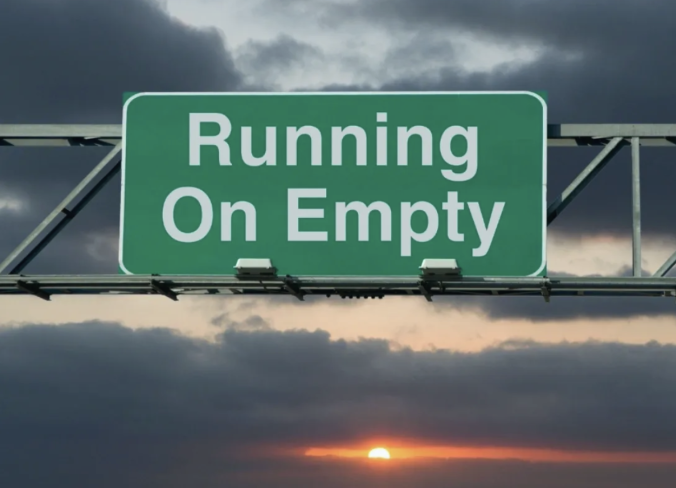
Recognizing Signs That You’re Running on Empty

Have you ever felt so exhausted that even a full night’s sleep doesn’t help? Or maybe your brain feels foggy, and even simple tasks seem overwhelming? If so, you might be running on empty—which means your body and mind are tired and need a real break.

Life can be stressful, with work, school, responsibilities, and social pressures all demanding your time and energy. But if you don’t take time to rest and recharge, your body and brain will start sending warning signs that something isn’t right.

This article will help you recognize the signs of burnout and show you simple ways to recover your energy and feel better.

What Happens When You’re Too Tired?

Your body has a built-in system that helps you handle stress and recover. But when you keep pushing yourself without rest, your system gets stuck in two states:

  1. Fight-or-flight mode – You feel anxious, restless, or stressed all the time.
  2. Shutdown mode – You feel completely drained, unmotivated, and even numb.

Instead of bouncing back after stress, your energy stays low, and even small things start feeling overwhelming.

Signs That You’re Running on Empty

If you notice these signs happening a lot, it may be time to slow down and recharge.

1. You Feel Tired All the Time

  • You wake up feeling just as exhausted as when you went to sleep.
  • Coffee or energy drinks barely help.
  • Even fun activities feel like too much effort.

2. You Can’t Think Clearly

  • You forget things easily.
  • It’s hard to focus at work or school.
  • You feel mentally “foggy” and struggle to make decisions.

3. You Feel Irritable or Overwhelmed

  • Small things make you frustrated or angry.
  • You feel more emotional than usual.
  • You get upset easily, or you feel numb and disconnected.

4. Your Sleep is Messed Up

  • You struggle to fall asleep because your mind won’t slow down.
  • You wake up a lot during the night.
  • You sleep more than usual but still feel tired.

5. Your Body Feels Tense and Stressed

  • You have frequent headaches.
  • Your muscles feel tight, especially in your neck, shoulders, or jaw.
  • You get stomachaches or digestive problems.

6. You Lose Interest in Things You Used to Enjoy

  • Your favorite hobbies seem boring.
  • You don’t feel like socializing or making plans.
  • You feel disconnected from people around you.

7. You Rely on Quick Fixes to Get Through the Day

  • You drink lots of caffeine or eat sugary snacks for energy.
  • You spend hours scrolling on your phone but don’t feel better.
  • You zone out in front of the TV instead of doing things you enjoy.

Why Ignoring These Signs is a Bad Idea

If you don’t take care of yourself, exhaustion can make things worse. It can lead to:

  • Getting sick more often
  • Struggling in school
  • Feeling sad or anxious all the time
  • Not wanting to do anything, even fun stuff

But don’t worry! If you notice these signs, there are simple ways to recharge your energy and start feeling better.

How to Get Your Energy Back

Here are some easy ways to help your body and brain feel rested:

1. Get More Sleep

  • Try going to bed at the same time every night.
  • Turn off screens (TV, phone, tablet) 30 minutes before bed.
  • Make your room dark and quiet to help you sleep better.

2. Take Breaks During the Day

  • Go outside for fresh air.
  • Stretch or move around when you feel stiff.
  • Close your eyes and take five deep breaths to calm your mind.

3. Drink Water and Eat Good Food

  • Drink water instead of soda or sugary drinks.
  • Eat healthy snacks like fruit, nuts, or yogurt.
  • Avoid too much candy or fast food—it can make you feel more tired later.

4. Move Your Body

  • Take a walk, ride a bike, or dance to your favorite song.
  • Do some stretching or yoga to relax.
  • Playing outside helps your brain and body feel refreshed.

5. Say “No” When You Need a Break

  • It’s okay to skip an activity if you’re too tired.
  • You don’t have to say “yes” to everything.
  • Let your friends and family know when you need time to rest.

6. Do Things That Make You Happy

  • Listen to music, draw, or read a book.
  • Spend time with friends who make you feel good.
  • Try a new hobby just for fun.

Conclusion

Your body and mind give you warning signs when you’re running on empty. If you’re always tired, cranky, or don’t enjoy things anymore, it’s time to slow down and take care of yourself.

The good news is, you can fix this! By sleeping better, eating healthy, moving your body, and taking breaks, you can get your energy back and feel happier.

So, listen to your body—when it says “I need a break,” give it one! 😊

References

Parker, G., Tavella, G., & Eyers, K. (2022). Burnout: A guide to identifying burnout and pathways to recovery. Taylor & Francis.

« Older posts

Sidebar