Licensed Psychologist | Online psychological services available across participating PSYPACT states

Category: Stress & Anxiety (Page 2 of 2)

Understanding Fight, Flight, Freeze, and Fawn

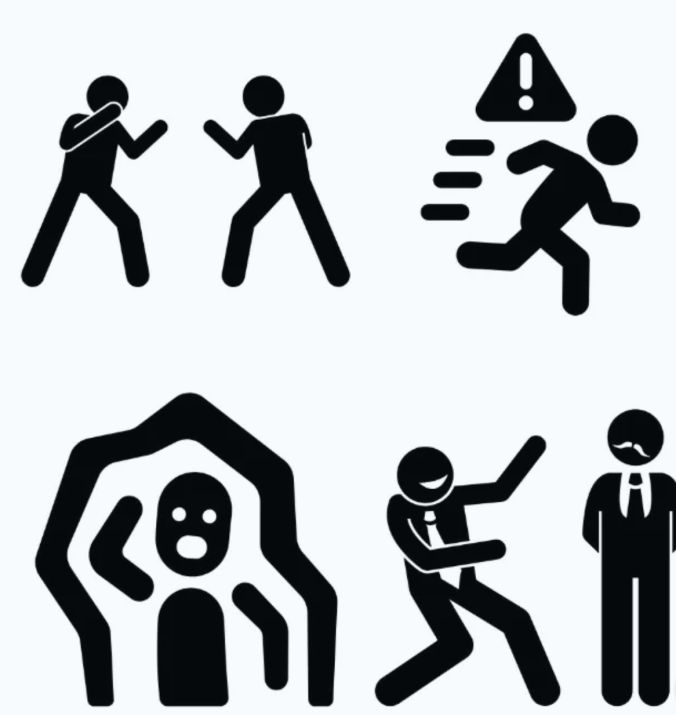
When we face stress or danger, our body reacts instinctively to protect us. These responses—known as fight, flight, freeze, and fawn—are the brain’s way of helping us survive. Each response serves a purpose, but they can also activate in non-life-threatening situations, like during arguments or overwhelming tasks.

  1. Fight: You feel the urge to confront the situation directly, whether through verbal or physical defense. This response comes with increased adrenaline and energy.
  2. Flight: You want to escape or avoid the source of stress. This could mean physically leaving or mentally withdrawing from the situation.
  3. Freeze: Your body becomes paralyzed, unable to react. This happens when the brain decides staying still might keep you safe.
  4. Fawn: You aim to please or placate others to diffuse tension. This often involves putting others’ needs above your own.

While these responses are natural, overreliance on one can lead to challenges in everyday life. Understanding your reactions is the first step toward managing stress.

Tips to Manage Stress and Regain Control:

  • Breathe Deeply: Practice slow, deep breathing to calm your nervous system. Try inhaling for 4 seconds, holding for 4 seconds, and exhaling for 4 seconds.
  • Ground Yourself: Use grounding techniques like the “5-4-3-2-1” method—name 5 things you see, 4 things you can touch, 3 you hear, 2 you smell, and 1 you taste.
  • Move Your Body: Physical activity, even a short walk, can help release pent-up tension and improve mood.
  • Journal Your Feelings: Writing down your thoughts can help you process emotions and identify triggers.
  • Practice Self-Compassion: Remind yourself that it’s okay to feel overwhelmed and seek support when needed.

“Hmm” vs. “Ugh”

Life throws curveballs—missed deadlines, unexpected weather, or even just a bad day. Our reactions to these moments can significantly impact our mental health. Most of us are familiar with the instinctive “ugh,” a reaction rooted in frustration, dismay, or rejection. But what if we replaced “ugh” with “hmm”? This small shift, from resistance to curiosity, can make a big difference in how we navigate life’s challenges.


The Science Behind “Ugh”

“Ugh” is more than just an expression—it’s a manifestation of emotional reactivity. According to Beck’s (1976) cognitive theory, such reactions may arise from distorted thinking. When things don’t go our way, our brains tend to catastrophize or overgeneralize. For instance, spilling coffee might spark an “ugh” followed by the thought, “This ruins my whole day.” This automatic negativity can increase stress and anxiety, trapping us in a cycle of frustration.

Additionally, “ugh” often reflects misperceptions. Imagine planning a beach day, only to encounter rain. The initial “ugh” assumes the trip is ruined. However, this reaction misses the potential for alternative enjoyable activities, such as visiting a local café or spending quality time indoors. By sticking to the “ugh” response, we limit our ability to adapt and find joy in the unexpected.


Why “Hmm” Matters

In contrast, “hmm” embodies curiosity and openness, encouraging us to pause, reflect, and explore. This shift can transform how we experience challenges.

  1. Reduces Negative Judgments. When we respond with “hmm,” we suspend judgment and consider alternative perspectives. Carl Rogers (1951) emphasized the importance of this openness for emotional wellbeing. Instead of thinking, “Ugh, my coworker is so rude,” curiosity might lead us to wonder, “Hmm, what might be going on with them today?”
  2. Encourages Mindfulness. Mindfulness involves staying present and observing experiences without judgment (Kabat-Zinn, 1990). Saying “hmm” instead of “ugh” keeps us grounded, reducing stress and fostering emotional regulation.
  3. Promotes Problem-Solving. The “ugh” mindset focuses on obstacles, while “hmm” seeks solutions. Research on emotion regulation by Gross (1998) shows that reframing situations leads to better outcomes. For example, when a plan falls apart, “hmm, how else can I make this work?” encourages creative thinking.
  4. Fosters Emotional Resilience. A curious approach helps us process emotions more effectively. Asking, “Hmm, why do I feel this way?” can provide insights, reducing the urge to suppress or avoid uncomfortable feelings.

How to Shift from “Ugh” to “Hmm”

Changing your default reaction takes practice, but it’s worth the effort. Here’s how to start:

  1. Notice the “Ugh”
    Pay attention to moments when you react with frustration or dismay. Simply recognizing the “ugh” is a step toward change.
  2. Pause and Reflect
    Instead of jumping to conclusions, take a deep breath and ask yourself a question beginning with “hmm.” For example:

    • “Hmm, what can I learn from this?”
    • “Hmm, how can I approach this differently?”
  1. Reframe the Situation
    Curiosity opens the door to new possibilities. Focus on what you can explore or adapt in the moment rather than dwelling on what went wrong.

Switching from “ugh” to “hmm” is a simple yet powerful tool for improving mental health. Curiosity helps us navigate life with openness and creativity, turning challenges into opportunities for growth. So, the next time life throws you a curveball, pause. Trade the “ugh” for a thoughtful “hmm,” and see how it transforms your perspective.

Read more from Rizaldy R. Ferrer, Ph.D.


References

  • Beck, A. T. (1976). Cognitive therapy and the emotional disorders. International Universities Press.
  • Gross, J. J. (1998). The emerging field of emotion regulation: An integrative review. Review of General Psychology, 2(3), 271–299.
  • Kabat-Zinn, J. (1990). Full catastrophe living: Using the wisdom of your body and mind to face stress, pain, and illness. Delacorte Press.
  • Rogers, C. R. (1951). Client-centered therapy: Its current practice, implications, and theory. Houghton Mifflin.

Creating vs. Fixing

When faced with life challenges, many of us default to “fixing” the difficulties because we assume that they are “broken,” rather than just are inevitable parts of life. Fixing may be an attempt to control every possible outcome in hopes of avoiding discomfort. While this may feel productive, it often fuels anxiety and distances us from the present moment. In contrast, the philosophy of “Creating vs. Fixing” encourages us to shift our focus to proactive, intentional actions that promote well-being in the now. Drawing on mindfulness, cognitive-behavioral practices, and existential psychology, this approach teaches us to live fully in the present while navigating life’s challenges. Let’s explore this transformative mindset through the lens of a therapy session between Cathy and I, a patient preparing for childbirth.

Cathy: I’d like to get some help with my pending childbirth and the fears I have about it. That’s at the top of my mind right now. I’ve mentioned to you before that childbirth has always been something I feared most of my life. And now, any day now, it’s happening. I’m already emotional about it. I’ve been trying not to dwell on it or think too much about it because it genuinely frightens me. I just want to ease that fear because it’s going to happen. If I go into it feeling afraid, I think it will make the experience worse. I want to own as much of the experience as possible because I believe it can be beautiful. But there are so many decisions and unknowns—it’s overwhelming.

Cathy proceeded with how she had been planning about her childbirth.

Dr. Ferrer: You seem to be overanalyzing your childbirth preparation—whether to drink the tea, do yoga stretches, eat the dates or even to determine how much epidural injections should you get. But all those are still making you anxious because you want a guarantee that they will make the process easier and also eliminate the fear you are experiencing recently. What if we shifted the focus from ensuring future success to asking, “What can I create right now that benefits me?”

Cathy: I feel stuck. I keep thinking, if I do all these things and they don’t make childbirth easier, what’s the point of even doing them? It feels like I’m setting myself up for disappointment even more.

Dr. Ferrer: That’s the mindset of “fixing”—doing something now purely to control a future outcome. Instead, let’s ask, “Does this action improve how I feel or function in this moment?” If drinking tea or stretching is better than worrying, then it’s worthwhile, regardless of what happens later.


Understanding the Problem: Fixing the Uncontrollable

The tendency to “fix” is natural. Fixing involves trying to solve or prevent future problems through meticulous analysis and planning. While this approach can be effective for practical tasks, it becomes problematic when applied to situations outside our control. Cathy’s fixation on childbirth preparation, for instance, stems from a desire to control an inherently unpredictable process. This overanalysis not only increases her anxiety but also consumes mental energy that could be used to enhance her current well-being.

The issue with fixing lies in its transactional nature—it’s tied to a specific desired outcome. If the outcome doesn’t align with expectations, the effort feels wasted. This mindset often leads to a cycle of disappointment, self-doubt, and paralysis.

The Alternative: Creating in the Present

In contrast, the argument of “creating” focuses on intentional actions that enhance the present moment, independent of future outcomes. By shifting her focus from controlling childbirth to engaging in meaningful activities, Cathy can redirect her energy toward actions that bring immediate value. Whether it’s deep cleaning her coffee maker, practicing gratitude meditation, or savoring her morning coffee, these acts of creation foster a sense of accomplishment and presence.

Creating isn’t just about productivity; it’s about cultivating a mindset of mindfulness and generativity. For Cathy, stretching or walking doesn’t have to guarantee an easier labor—it’s enough that these activities help her feel grounded and healthy now.

Why Creating Works: A Theoretical Perspective

  1. Mindfulness Theory (Kabat-Zinn, 1990): Creating aligns with mindfulness by anchoring individuals in the present. Mindful actions like gratitude meditations or sensory awareness reduce mental clutter and help individuals step out of anxiety cycles.
  2. Flow Theory (Csikszentmihalyi, 1990): By engaging in meaningful tasks, individuals enter a “flow state,” characterized by deep focus and enjoyment. Cleaning, walking, or stretching can be flow-inducing, helping Cathy feel accomplished and calm.
  3. Cognitive Behavioral Therapy (Beck, 1976): Fixing often reflects cognitive distortions like catastrophizing or fortune telling. Creating, on the other hand, aligns with CBT principles by emphasizing actionable, positive behaviors that counter negative thought spirals.
  4. Existential Psychology (Frankl, 1946): Creating connects to the existential idea that meaning arises from proactive engagement with life’s challenges. By focusing on what she can create, Cathy finds purpose in the journey, not just the outcome.

Practical Steps to Shift from Fixing to Creating

To adopt the mindset of creating, consider these practical steps:

  1. Ask, “What can I do now?” Instead of worrying about outcomes, focus on actions that enhance your present.
  2. Engage your senses. Activities like smelling coffee beans or feeling the texture of your sheets can ground you in the moment.
  3. Practice gratitude. Start your day by identifying things you’re thankful for, then immerse yourself in those thoughts.
  4. Create daily intentions. Set achievable, well-being-promoting goals for the day, such as taking a walk or meditating.

A Transformative Perspective

By embracing the philosophy of “Creating vs. Fixing,” Cathy—and anyone grappling with uncertainty—may hopefully reduce anxiety, increase self-efficacy, and find joy in the process of living. This principle doesn’t negate the value of preparation but reframes it as a means to cultivate presence and intention. Life is unpredictable, but our ability to create meaning in the moment is always within our control.

Read more from Rizaldy R. Ferrer, Ph.D.


References:

Beck, A. T. (1976). Cognitive therapy and the emotional disorders. International Universities Press.

Csikszentmihalyi, M. (1990). Flow: The psychology of optimal experience. Harper & Row.

Frankl, V. E. (1984). Man’s search for meaning (Rev. ed.). Washington Square Press. (Original work published 1946)

Kabat-Zinn, J. (1990). Full catastrophe living: Using the wisdom of your body and mind to face stress, pain, and illness. Delacorte Press.


Disclaimer: The information provided in this newsletter is not intended to be a substitute for professional medical or mental health advice. If you are experiencing any mental health issues, please seek professional help. The author of this blog is not liable for any damages or injuries that may result from the use of the information provided here.

When applicable, the names, gender identification, location and/or other identifiable characteristics have been modified to maintain privacy and confidentiality; whilst, still maintaining the integrity of their stories and narratives.

Karoshi

Recently, I watched a documentary that left a profound impression on me, shedding light on Japan’s complex state of wellbeing. It painted a picture of “two worlds” within the country. On one side, in places like Tokyo, people are hustling and bustling, seemingly in a constant fight for survival, working long hours and pushing themselves to their limits. On the other side, in regions like Okinawa, a designated Green Zone, people are living peaceful, balanced lives, with many reaching their centennial years.

In this documentary, they introduced the term Karoshi, a Japanese word that refers to the compulsive desire to work hard, even to the point of harming one’s health. This concept struck me because it closely ties to the Western culture of overwork. I felt compelled to share what I learned and bring this message to you, hoping that you will reflect on your own life, especially on your economic wellbeing.

Understanding Karoshi: The Dangers of Overworking

Karoshi, which translates to “death by overwork,” became a recognized issue in Japan as early as the 1980s. The World Health Organization (2021) has reported that overwork leads to an increased risk of heart disease and stroke. In Japan, many workers push themselves so hard that their health breaks down, a problem compounded by a cultural expectation to dedicate one’s life to work. Karoshi—the compulsive drive to work at all costs—feeds into this cycle. The more people feel pressured to prove their worth through their work, the more they sacrifice their health.

In the U.S., though we might not use the same terms, the situation is similar. The American work culture values busyness and productivity, often at the expense of personal wellbeing. According to a report by the American Institute of Stress (2021), 83% of workers in the U.S. experience significant stress related to their jobs. This mirrors the pressure seen in Tokyo and highlights a global issue of overwork.

The Contrast with Okinawa’s Green Zone

In contrast to the hustle and grind of Tokyo and similar urban centers, Okinawa offers an entirely different way of life. Okinawa is part of the world’s “Blue Zones,” places where people live exceptionally long, healthy lives. The people of Okinawa embrace balance in their daily activities, including work. They value community, health, and leisure, which helps explain why many live to be 100 years or older.

What can we learn from this? The contrast between Tokyo’s fast-paced life and Okinawa’s slower, balanced lifestyle offers a powerful lesson: a life driven by overwork is not sustainable. Karoshi are stark reminders of the cost of sacrificing wellbeing for work, whereas Okinawa shows us that focusing on balance and prioritizing health can lead to longevity and happiness.

How This Relates to Us: Economic Wellbeing and Our Choices

You may be wondering how all of this relates to your own life, especially here in America. The truth is, many of us fall into the same trap of overworking, driven by financial pressures and the cultural expectation to be constantly productive. However, the story of Karoshi reminds us that this drive can be dangerous. It’s essential to pause and reflect: Are we working so hard that we’re sacrificing our health? How can we find balance in our work lives to improve our wellbeing?

Seeking a healthier balance, both economically and personally, is key. Taking time for yourself, setting boundaries between work and personal life, and prioritizing your mental and physical health are steps we can all take to prevent burnout and stress. And remember, seeking help from a therapist or counselor when you’re feeling overwhelmed can make all the difference.

A Call to Action: Reflect on Your Wellbeing

As you reflect on your own life, consider how your work habits might be affecting your health and happiness. The lessons of Karoshi, and Okinawa’s Green Zone are clear: a life that prioritizes balance over constant busyness leads to better health and greater fulfillment. In the end, your economic wellbeing depends on more than just how hard you work—it’s about how you care for yourself, too.

If you find yourself stressed, overwhelmed, or unable to cope with the pressures of work, reach out to a mental health professional. Your wellbeing is worth investing in, and it’s never too late to make changes for a healthier, happier life.

Read more from Rizaldy R. Ferrer, Ph.D.


References

American Institute of Stress. (2021). Stress in America: Latest statistics. Retrieved from

https://www.stress.org/

Mayo Clinic. (2020). Stress management: The physical toll of chronic stress. Retrieved from https://www.mayoclinic.org/healthy-lifestyle/stress-management

Takahashi, M. (2019). Overwork-related disorders in Japan: Recent trends and development of a national policy to promote preventive measures. Industrial Health, 57(3), 245–250. https://doi.org/10.2486/indhealth.2018-0218

World Health Organization. (2021). Long working hours increasing deaths from heart disease and stroke. Retrieved from https://www.who.int/news-room

I’m Active, Not Busy!

Over 10 years ago, during a therapy session with a 12-year-old patient, I started the conversation by asking, “How are you? Have you been busy?” He paused for a moment and then replied, “No, active.” His response struck me, and it since changed the way I think about the words I choose to describe my intentions and how I go about my day.

I realized that using the word “busy” often leaves me feeling stressed and anxious, as though I’m running around without purpose—like a chicken with its head cut off. When I reflect on how people usually say they’re “busy,” it often seems to carry a sense of being overwhelmed or not in control of life’s demands. Some even wear “busy” as a badge of honor, as if juggling too many things is normal, even though they don’t actually enjoy the feeling.

This experience inspired me to continue to explore how the words we use everyday matter in the way we think and their impact on our feelings and actions. In my work as a practicing psychologist, I pay attention to individuals’ experiences associated with “feeling busy,” and suggest trying to use “active” to gain more control over their behaviors. In this article, I also explore the cultural and common idea of being “busy” in today’s world, looking at research that shows how the words we use shape our behavior, thinking, and wellbeing.

The word “busy” seems to be a common answer to the question, “How are you?” For many, being “busy” has become a way of life, almost a standard response that suggests a sense of productivity and purpose. But is this really the case? The word “busy” often implies that we are overwhelmed and constantly reacting to endless demands. It suggests a lack of control over our time and energy, and it can carry a heavy sense of stress.

The Problem with “Busy”

When people describe themselves as “busy,” they might actually be conveying that their lives feel chaotic and unmanageable. Research shows that this perception of busyness is often linked to increased stress and burnout. A study by Gordon et al. (2019) found that the language we use to talk about our daily lives, like saying we’re “busy,” is directly related to how much stress we experience. People tend to feel less in control when they frame their day-to-day tasks as overwhelming and unmanageable.

In contrast, I argue that when we think of ourselves as “active,” there’s a shift in how we approach our tasks. Being “active” suggests intention and purpose—it implies that we are engaged in our activities by choice, rather than feeling trapped by them. This shift in perspective can make a significant difference in how we experience our daily lives.

Words Shape Our Reality

The idea that language shapes how we think, and feel has long been studied in the field of psychology. According to the Sapir-Whorf Hypothesis (Whorf, 1956), the words we use influence our perception of reality. For instance, a study conducted by Boroditsky (2001) demonstrated that people who speak different languages perceive time differently based on how their language structures the concept of time. This finding shows that our words don’t just reflect our thoughts; they actively shape them.

When we repeatedly use the word “busy,” it can reinforce feelings of stress and anxiety, making it more challenging to find calm in our everyday activities. On the other hand, using a word like “active” can encourage a mindset that focuses on purposeful action and engagement, helping us feel more in control and less overwhelmed.

Changing Language, Changing Behavior

Research has also shown that changing our language can lead to changes in our behavior. Carol Dweck (2006), in her study of mindsets, found that students who used language focused on growth and learning were more resilient and willing to embrace challenges. They developed what she termed a “growth mindset,” which significantly improved their problem-solving skills and adaptability.

Applying this idea to our daily lives, when we choose to describe ourselves as “active” instead of “busy,” we might find that we approach challenges with more intention and clarity. The simple act of changing our language can help us shift from feeling overwhelmed to feeling engaged and purposeful.

The Impact on Wellbeing

Our choice of words also has a profound impact on our overall wellbeing. Studies have shown that people who regularly describe their lives as “busy” are more likely to experience negative emotions, such as anxiety and stress (Matthews & Wells, 2020). In contrast, those who describe their activities as “active” or “engaged” tend to report higher levels of satisfaction and a greater sense of accomplishment.

Killingsworth and Gilbert (2010) conducted a study revealing that people are happiest when they are fully present in their activities, regardless of how many tasks they have. This finding aligns with the idea that being “active” promotes mindfulness and focus, while being “busy” can lead to distraction and a sense of losing control over one’s life.

Conclusion

Choosing to be “active” rather than “busy” is more than just a shift in language—it’s a shift in mindset. This change can help us regain control of our lives, turning what feels like chaos into a series of purposeful actions. By reframing our tasks as part of a chosen engagement rather than overwhelming demands, we create a more balanced, intentional approach to our daily activities.

Read more from Rizaldy R. Ferrer, Ph.D.


References

Boroditsky, L. (2001). Does Language Shape Thought? Mandarin and English Speakers’ Conceptions of Time. Cognitive Psychology, 43(1), 1-22.

Dweck, C. S. (2006). Mindset: The New Psychology of Success. Random House.

Gordon, C., Montgomery, A., & Napier, S. (2019). The Language of Stress: How Words Relate to Mental Health. Journal of Applied Linguistics, 15(2), 210-227.

Killingsworth, M. A., & Gilbert, D. T. (2010). A Wandering Mind Is an Unhappy Mind. Science, 330(6006), 932.

Matthews, G., & Wells, A. (2020). Stress and Language: The Role of Everyday Expressions in Mental Health. Health Psychology Review, 14(3), 456-478.

Whorf, B. L. (1956). Language, Thought, and Reality: Selected Writings of Benjamin Lee Whorf. MIT Press.

Newer posts »

Sidebar