In today’s culture, self-care is often sold to us as something you need to buy—a luxury spa day, a weekend getaway, a new skincare set, or a perfectly curated morning routine. Social media and advertising have turned well-being into a product, making it easy to believe that taking care of ourselves means spending money. But self-care doesn’t have to come with a price tag. In fact, Dr. Laurie Santos (2019), professor of psychology at Yale and creator of the “Science of Well-Being” course, reminds us that the most effective ways to boost mental health—like sleep, gratitude, exercise, and social connection—are completely free and backed by science.
The problem is, we often dismiss these simple acts because they don’t feel special or “Instagram-worthy.” This mindset is influenced by what psychologists call the negativity bias, which is our brain’s natural tendency to focus more on what’s wrong or lacking than on what’s positive or working (Baumeister et al., 2001). This bias can cause us to overlook the quiet but meaningful ways we already support our mental health—like resting, journaling, laughing with a friend, or even breathing deeply for a few minutes. When these practices are not labeled as self-care, we may assume we’re doing “nothing” for ourselves, even when we’re actually doing something important.
By becoming more aware of this bias, we can reframe how we view self-care. Start by naming the small, restorative things you do each day—like stepping outside for fresh air or pausing to stretch—and say to yourself, “This is self-care.” Practicing gratitude, even briefly, can shift your attention toward what’s nourishing and true. The more we acknowledge the value of accessible, no-cost forms of care, the more empowered we become to care for our mental health consistently—no purchases necessary.
Have you ever asked yourself, “What’s wrong with me?” or thought, “I don’t deserve good things”? If so, you’re not alone. Many people, especially those going through depression or anxiety, struggle with feeling unworthy.
But where do these feelings come from? And more importantly, how can we begin to change them?
Let’s take a closer look.
What “Feeling Unworthy” Really Means
Feeling unworthy is more than just having a bad day. It’s a deep belief that you’re not good enough—not smart enough, lovable enough, successful enough, or simply not enough.
Psychologists call this low self-concept clarity—it means you’re unsure of who you are and what makes you valuable (Campbell et al., 2003). When this happens, it’s easy to doubt your worth, compare yourself to others, or feel like you’re constantly falling behind.
Where These Feelings Often Come From
People who feel unworthy usually don’t just wake up one day and feel that way. These thoughts often start early and build over time. Based on research and what people share in therapy, here are some common reasons:
You were criticized or ignored as a child (“I only got attention when I messed up.”)
You had to care for others before yourself (“My feelings didn’t matter.”)
You were only praised for achievements (“If I wasn’t perfect, I felt like a failure.”)
You were bullied or rejected (“Others made me feel small.”)
You compare yourself constantly (“Everyone else seems to be doing better than me.”)
You experienced trauma or abuse (“I thought I caused it… I must be bad.”)
These experiences can shape the way we think about ourselves—even long after they’re over (Brown, 2006; Herman, 1992).
You Can Start Rebuilding Your Worth—One Day at a Time
The good news? You can begin healing—not all at once, but with small steps. Here are simple, daily activities (5–15 minutes) that can help rebuild your sense of worth.
1. Say Something Kind to Yourself in the Mirror (5 min)
Look yourself in the eye and say one true, positive thing. Example: “I’m doing my best, and that counts.” This builds self-compassion, which helps reduce shame and social anxiety (Neff & Vonk, 2009).
2. Write a Short “I Am” List (5 min)
Each day, write 3 words that describe you right now. Example: “I am tired, thoughtful, and trying.” This helps increase self-concept clarity—knowing and accepting who you are (Campbell et al., 2003).
3. Practice a Brave Choice (5–10 min)
Speak up in a group, share your opinion, or say no when needed. These “small brave acts” help rebuild confidence, especially in social situations (Clark & Wells, 1995).
4. Reach Out to Someone (10 min)
Text someone and say: “Can I share something I’ve been thinking about?” Even one real connection a day can reduce loneliness and build self-worth (APA, 2019).
5. Take a Quiet Walk Alone (15 min)
Leave your phone. Pay attention to your steps, your breath, and your surroundings. This helps you feel grounded and notice your own presence—a key part of developing identity.
6. Affirm What You Value (5 min)
Write one sentence each day: “Today, I lived out my value of ____ by doing ____.” Living by your values gives your life direction—and boosts your self-trust (Creswell et al., 2005).
You’re Not a Problem to Fix—You’re a Person to Care For
Healing doesn’t mean becoming a “perfect” person. It means becoming a person who can say, “I’m allowed to take up space.”
Brown, B. (2006). Shame resilience theory: A grounded theory study on women and shame. Families in Society, 87(1), 43–52. https://doi.org/10.1606/1044-3894.3483
Campbell, J. D., Trapnell, P. D., Heine, S. J., Katz, I. M., Lavallee, L. F., & Lehman, D. R. (2003). Self-concept clarity: Measurement, personality correlates, and cultural boundaries. Journal of Personality and Social Psychology, 85(5), 895–908. https://doi.org/10.1037/0022-3514.85.5.895
Clark, D. M., & Wells, A. (1995). A cognitive model of social phobia. In R.G. Heimberg et al. (Eds.), Social phobia: Diagnosis, assessment, and treatment (pp. 69–93). Guilford Press.
Creswell, J. D., et al. (2005). Affirmation of personal values buffers neuroendocrine and psychological stress responses. Psychological Science, 16(11), 846–851. https://doi.org/10.1111/j.1467-9280.2005.01624.x
Herman, J. L. (1992). Trauma and recovery. Basic Books.
Neff, K. D., & Vonk, R. (2009). Self-compassion versus global self-esteem: Two different ways of relating to oneself. Journal of Personality, 77(1), 23–50. https://doi.org/10.1111/j.1467-6494.2008.00537.x
Mental health is about how we think, feel, and act. It affects how we handle stress, relate to others, and make choices (Centers for Disease Control and Prevention [CDC], 2023). Just like physical health, our mental health needs care and attention too. If we ignore it, we may feel sad, tired, or even get sick.
Why May Is Mental Health Awareness Month
Each year, the month of May is set aside to talk about mental health. Mental Health Awareness Month has been around since 1949. It helps people learn more about mental health and how to take care of it (Mental Health America, 2024). It also reminds us that it’s okay to ask for help.
How to Know If Someone Is Struggling
People do not always say when they’re having a hard time, but here are some signs to watch for:
Not wanting to do things they usually like
Sleeping too much or not enough
Feeling sad or angry for a long time
Saying they feel “off” or “not themselves”
If you notice any of these signs in yourself or someone else, it’s important to talk to a trusted adult, like a parent, teacher, or counselor.
Easy Ways to Take Care of Your Mental Health
You don’t need to do big things to stay mentally healthy. Small steps matter too. Here are a few easy ideas:
Take breaks when you feel stressed
Get some fresh air and move your body
Talk to friends and family
Write in a journal
Ask for help when you need it
Just like brushing your teeth every day keeps your mouth healthy, doing these things can help your mind stay strong.
Let’s Help Each Other
You can make a difference by checking in with your friends. Ask them how they are doing, really listen, and let them know they’re not alone. Sharing your own feelings can help others feel safe to share too.
Final Thoughts
Mental health is important for everyone—kids, teens, and adults. You don’t have to go through tough times alone. Asking for help is a sign of strength, not weakness. Let’s keep talking, keep caring, and keep showing up for each other.
Have you ever walked into a room and totally forgotten why you were there? Or started a chore, then got distracted and moved on to something else without finishing? That might sound familiar to many people—but for someone with ADHD, it happens a lot more often, and it’s usually not their fault.
This is where executive functioning comes in. Think of it as the brain’s air traffic control system—helping you plan, focus, remember, manage time, and control emotions. When this system doesn’t work well, it’s like trying to fly planes with no radar. Things can get messy, fast.
What Is Executive Functioning?
According to leading psychologist Dr. Russell Barkley, executive functions are mental skills we use every day to get things done. These include:
Self-awareness – noticing what we’re doing and how we’re doing.
Self-restraint – stopping ourselves from saying or doing things too quickly.
Working memory – remembering things long enough to use them.
Emotional regulation – handling our feelings in a healthy way.
Self-motivation – getting started on something, even when we don’t feel like it.
Planning and problem-solving – making a plan and adjusting it when needed.
Organization – keeping track of things and staying tidy.
All of these skills help us function at home, school, or work. When they are weak, daily life becomes much harder.
How ADHD Affects Executive Functioning
People with ADHD (Attention-Deficit/Hyperactivity Disorder) have a brain-based condition that affects executive functioning. They may struggle to stay focused, manage time, remember instructions, or hold back emotions—even when they’re really trying.
Dr. Barkley says ADHD is not just about being hyper or distracted. It’s a developmental delay in self-regulation. In other words, it’s harder for people with ADHD to stop, think, and act in ways that match their goals.
For example:
They might say something without thinking and regret it right away.
They may want to do homework, but their brain pulls them toward YouTube or gaming.
They may feel overwhelmed when asked to plan a big project.
These are not signs of laziness or carelessness. They are symptoms of how the ADHD brain works differently.
What Helps?
The good news is: executive functioning can improve with the right tools! Some strategies that research supports include:
Visual reminders and timers to stay on track.
Checklists to break big tasks into small steps.
Body movement and breaks to help reset focus.
Mindfulness techniques to help pause before reacting.
Daily planning routines to organize time and space.
Coaching, therapy, and sometimes medication can also support brain function and daily skills.
Everyone struggles with focus and planning sometimes. But for someone with ADHD, these challenges happen more often and have a bigger impact. Understanding executive functioning helps us show more support, not judgment.
With patience, practice, and support, people with ADHD can thrive—and their brains, while different, are full of creativity, ideas, and strength.
References
Barkley, R. A. (2012). Executive functions: What they are, how they work, and why they evolved. Guilford Press.
Barkley, R. A. (2020). Attention-deficit hyperactivity disorder: A handbook for diagnosis and treatment (4th ed.). Guilford Publications.
Positive psychology is a part of psychology that focuses on the positive parts of life. Instead of only studying problems like sadness or anxiety, it looks at what helps people feel happy, strong, and fulfilled. Psychologists in this field ask questions like, “What makes life meaningful?” or “What helps people stay hopeful even during hard times?” It’s about understanding what goes well in life and how we can have more of it (Seligman & Csikszentmihalyi, 2000).
One important idea in positive psychology is that everyone has personal strengths. These can be things like kindness, bravery, creativity, or love of learning. When we use our strengths, we often feel more confident and motivated. Positive psychology also shows that practicing gratitude—like writing down things you’re thankful for—can boost your mood and help you handle stress better. Even simple acts, like helping others or spending time in nature, can help improve mental well-being.
Positive psychology teaches us that mental health is not just about fixing problems, but also about building a life that feels good and meaningful. It reminds us to focus on what’s going right, not just what’s going wrong. By learning more about our strengths, practicing gratitude, and connecting with others, we can feel happier and stronger each day. In this way, positive psychology helps people not just survive—but thrive.
References Seligman, M. E. P., & Csikszentmihalyi, M. (2000). Positive psychology: An introduction. American Psychologist, 55(1), 5–14. https://doi.org/10.1037/0003-066X.55.1.5
Overthinking and decision paralysis happen when certain parts of the brain become too active, especially the prefrontal cortex, amygdala, and basal ganglia. The prefrontal cortex helps with thinking and decision-making, but when there are too many choices, it gets overwhelmed, making decisions harder. The amygdala, which controls emotions, becomes too active under stress, making people feel anxious and unsure. Scientists found that people who overthink have extra activity in the dorsolateral prefrontal cortex (DLPFC), which helps with memory and planning (Gillett & Glannon, 2023). This overactivity creates a loop—more stress leads to more overthinking, making choices even more difficult.
Another part of the brain, the basal ganglia, helps with habits and making choices. If it doesn’t work properly, people struggle to take action (Brahmacari, 2018). The anterior cingulate cortex, which helps solve conflicts and spot mistakes, can become overactive, making people second-guess their decisions (Chachane & Jagtap, 2024). But there is good news—scientists say the brain can change and adapt. Mindfulness, neurofeedback, and simple mental exercises can help people break free from overthinking (Capanna-Hodge, 2024).
Ways to Stop Overthinking and Make Decisions Faster
Use the “5-Second Rule” – If you feel stuck, count 5-4-3-2-1 and make a small move toward a decision. This helps stop hesitation.
Set a Time Limit – Give yourself a set time to decide (e.g., “I will choose in 10 minutes”). This prevents endless thinking.
Limit Choices – Too many options create stress. Narrow choices to two or three for easier decisions.
Use Pros and Cons, Then Trust Your Gut – Write a simple list, but also listen to how you feel about the choice.
Take Action Quickly – Even a small step in one direction helps break decision paralysis. Action builds confidence.
Try Deep Breathing or Mindfulness – Breathing slowly calms the amygdala, reducing anxiety and helping clear your mind.
Ask: “Will this matter in 5 years?” – This helps you see if a decision is really important or just feels urgent.
Accept That No Choice is Perfect – Every decision has risks, but moving forward is better than staying stuck.
These simple strategies help the brain stay balanced, reduce stress, and make decisions with more confidence.
Have you ever felt so exhausted that even a full night’s sleep doesn’t help? Or maybe your brain feels foggy, and even simple tasks seem overwhelming? If so, you might be running on empty—which means your body and mind are tired and need a real break.
Life can be stressful, with work, school, responsibilities, and social pressures all demanding your time and energy. But if you don’t take time to rest and recharge, your body and brain will start sending warning signs that something isn’t right.
This article will help you recognize the signs of burnout and show you simple ways to recover your energy and feel better.
What Happens When You’re Too Tired?
Your body has a built-in system that helps you handle stress and recover. But when you keep pushing yourself without rest, your system gets stuck in two states:
Fight-or-flight mode – You feel anxious, restless, or stressed all the time.
Shutdown mode – You feel completely drained, unmotivated, and even numb.
Instead of bouncing back after stress, your energy stays low, and even small things start feeling overwhelming.
Signs That You’re Running on Empty
If you notice these signs happening a lot, it may be time to slow down and recharge.
1. You Feel Tired All the Time
You wake up feeling just as exhausted as when you went to sleep.
Coffee or energy drinks barely help.
Even fun activities feel like too much effort.
2. You Can’t Think Clearly
You forget things easily.
It’s hard to focus at work or school.
You feel mentally “foggy” and struggle to make decisions.
3. You Feel Irritable or Overwhelmed
Small things make you frustrated or angry.
You feel more emotional than usual.
You get upset easily, or you feel numb and disconnected.
4. Your Sleep is Messed Up
You struggle to fall asleep because your mind won’t slow down.
You wake up a lot during the night.
You sleep more than usual but still feel tired.
5. Your Body Feels Tense and Stressed
You have frequent headaches.
Your muscles feel tight, especially in your neck, shoulders, or jaw.
You get stomachaches or digestive problems.
6. You Lose Interest in Things You Used to Enjoy
Your favorite hobbies seem boring.
You don’t feel like socializing or making plans.
You feel disconnected from people around you.
7. You Rely on Quick Fixes to Get Through the Day
You drink lots of caffeine or eat sugary snacks for energy.
You spend hours scrolling on your phone but don’t feel better.
You zone out in front of the TV instead of doing things you enjoy.
Why Ignoring These Signs is a Bad Idea
If you don’t take care of yourself, exhaustion can make things worse. It can lead to:
Getting sick more often
Struggling in school
Feeling sad or anxious all the time
Not wanting to do anything, even fun stuff
But don’t worry! If you notice these signs, there are simple ways to recharge your energy and start feeling better.
How to Get Your Energy Back
Here are some easy ways to help your body and brain feel rested:
1. Get More Sleep
Try going to bed at the same time every night.
Turn off screens (TV, phone, tablet) 30 minutes before bed.
Make your room dark and quiet to help you sleep better.
2. Take Breaks During the Day
Go outside for fresh air.
Stretch or move around when you feel stiff.
Close your eyes and take five deep breaths to calm your mind.
3. Drink Water and Eat Good Food
Drink water instead of soda or sugary drinks.
Eat healthy snacks like fruit, nuts, or yogurt.
Avoid too much candy or fast food—it can make you feel more tired later.
4. Move Your Body
Take a walk, ride a bike, or dance to your favorite song.
Do some stretching or yoga to relax.
Playing outside helps your brain and body feel refreshed.
5. Say “No” When You Need a Break
It’s okay to skip an activity if you’re too tired.
You don’t have to say “yes” to everything.
Let your friends and family know when you need time to rest.
6. Do Things That Make You Happy
Listen to music, draw, or read a book.
Spend time with friends who make you feel good.
Try a new hobby just for fun.
Conclusion
Your body and mind give you warning signs when you’re running on empty. If you’re always tired, cranky, or don’t enjoy things anymore, it’s time to slow down and take care of yourself.
The good news is, you can fix this! By sleeping better, eating healthy, moving your body, and taking breaks, you can get your energy back and feel happier.
So, listen to your body—when it says “I need a break,” give it one! 😊
References
Parker, G., Tavella, G., & Eyers, K. (2022). Burnout: A guide to identifying burnout and pathways to recovery. Taylor & Francis.
Have you ever felt like no matter what you do, it’s just not enough? Maybe you’ve thought, “I’m not smart enough,”“I’m not successful enough,” or “I’m not good enough for others.” You’re not alone. Many people experience these thoughts, often without realizing how much they affect their happiness and mental well-being.
Psychologists have studied this issue for years and found that feeling “enough” is not about how much you achieve but rather about how you see yourself. Research in positive psychology, mental health, and counseling psychology shows that self-worth is something we can nurture and grow—and it doesn’t depend on being perfect (Seligman, 2019).
Why Do We Feel “Not Enough”?
There are many reasons people feel like they don’t measure up. Some of the most common include:
1. Comparing Ourselves to Others
Social media makes it easy to compare our lives to others. We see people traveling the world, getting promotions, or looking flawless in photos. It’s easy to think, “Why don’t I have that?” or “I must be doing something wrong.” But the truth is, social media only shows the highlights, not the struggles (Cain et al., 2008).
2. Society’s Expectations
We live in a world that constantly tells us we need more—more success, more beauty, more accomplishments. Advertisements, movies, and even well-meaning family members can make us feel like we aren’t doing enough to be happy. But studies show that chasing perfection often leads to anxiety and burnout rather than true fulfillment (Flett & Hewitt, 2002).
3. Childhood Experiences
The way we were raised also plays a role in our self-worth. If we grew up in an environment where we felt criticized or unappreciated, we might carry those feelings into adulthood (Emde, 1981). The good news? We can rewire our thinking and develop a healthier sense of self.
What Psychology Says About Being “Enough”
So, how can we break free from these negative thoughts? Research in psychology has identified a few key ideas that help people build confidence and feel more fulfilled.
1. Focus on What Really Matters
Dr. Martin Seligman, a leading psychologist, developed the PERMA Model to explain what truly brings happiness (Seligman, 2019). According to this model, fulfillment comes from:
Positive emotions – Finding joy in small moments.
Engagement – Doing activities that make you lose track of time.
Relationships – Spending time with people who care about you.
Meaning – Having a sense of purpose.
Accomplishment – Setting goals that matter to you.
This model shows that happiness doesn’t come from being perfect—it comes from living a life that feels meaningful to you.
2. Stop the Negative Self-Talk
Many of us have an inner voice that constantly says, “You’re not good enough.” But what if we challenged that voice? Cognitive-behavioral therapy (CBT) teaches people to replace negative thoughts with realistic, supportive ones (Kazdin, 2000).
For example, instead of thinking, “I’ll never be successful,” try: “I am learning and growing every day.”
Instead of “I’m not attractive enough,” try: “I am unique, and my worth isn’t based on my looks.”
These small shifts in thinking can have a huge impact on self-confidence.
3. Practice Self-Compassion
Dr. Kristin Neff (2011) studied self-compassion, which means treating yourself with the same kindness you’d show a friend. Instead of being harsh on yourself for making mistakes, try saying, “It’s okay. Everyone struggles sometimes.”
Research shows that self-compassion reduces anxiety and depression while increasing happiness. So, the next time you’re feeling down, talk to yourself like you would talk to a loved one.
Simple Ways to Feel “Enough” Every Day
If you struggle with feelings of inadequacy, here are some practical ways to start building self-worth:
1. Write Down Your Strengths
Each day, write down three things you like about yourself—it could be your kindness, humor, or creativity. Over time, this helps train your brain to focus on the positive instead of the negative.
2. Limit Social Media Use
Unfollow accounts that make you feel bad about yourself. Instead, follow pages that inspire and uplift you.
3. Spend Time with Supportive People
Surround yourself with friends and family who appreciate you for who you are, not for what you achieve.
4. Set Realistic Goals
Instead of pressuring yourself to be perfect, set small, achievable goals. Celebrate progress, not just results.
5. Practice Gratitude
Take a moment each day to appreciate what you have. Gratitude shifts your focus from what’s missing to what’s already good in your life.
Final Thoughts: You Are Already Enough
You don’t need to be richer, thinner, or more successful to be worthy. Your value isn’t based on how much you accomplish or how perfect you appear to others. You are enough—just as you are.
Science shows that true happiness doesn’t come from external achievements but from how we see ourselves and how we live our lives. By practicing self-compassion, changing negative thoughts, and focusing on what truly matters, you can start embracing your worth.
So, the next time you doubt yourself, remember: You are already enough.
References
Cain, N. M., Pincus, A. L., & Ansell, E. B. (2008). Narcissism at the crossroads: Phenotypic description of pathological narcissism across clinical theory, social/personality psychology, and psychiatric diagnosis. Clinical Psychology Review, 28(4), 638-656.
Emde, R. N. (1981). Mother’s presence is not enough: Effect of emotional availability on infant exploration. Developmental Psychology, 17(3), 292-293.
Flett, G. L., & Hewitt, P. L. (2002). Perfectionism: Theory, research, and treatment. American Psychological Association.
Kazdin, A. E. (2000). Encyclopedia of psychology. American Psychological Association.
Neff, K. (2011). Self-compassion, self-esteem, and well-being. Social and Personality Psychology Compass, 5(1), 1-12.
Seligman, M. E. P. (2019). Positive psychology: A personal history. Annual Review of Clinical Psychology, 15, 1-23.
Seligman, M. E. P., & Csikszentmihalyi, M. (2000). Positive psychology: An introduction. American Psychologist, 55(1), 5-14.
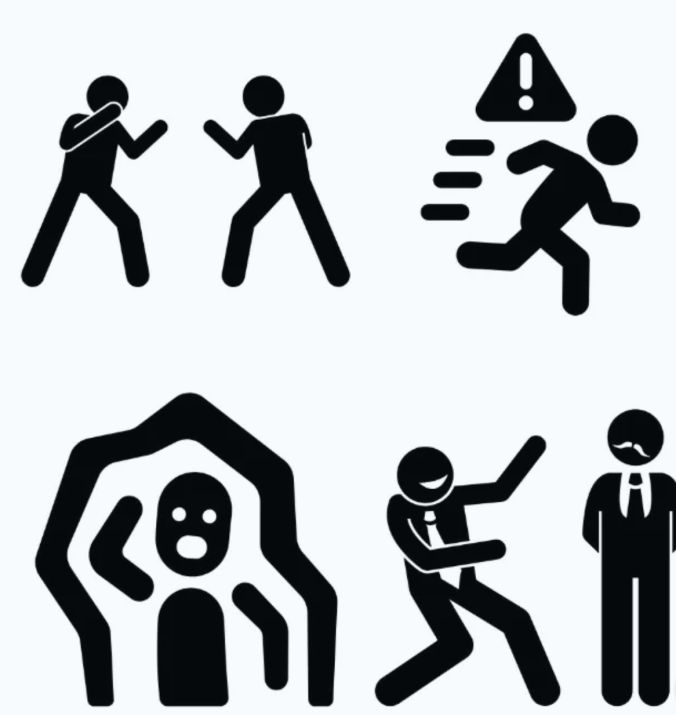
When we face stress or danger, our body reacts instinctively to protect us. These responses—known as fight, flight, freeze, and fawn—are the brain’s way of helping us survive. Each response serves a purpose, but they can also activate in non-life-threatening situations, like during arguments or overwhelming tasks.
Fight: You feel the urge to confront the situation directly, whether through verbal or physical defense. This response comes with increased adrenaline and energy.
Flight: You want to escape or avoid the source of stress. This could mean physically leaving or mentally withdrawing from the situation.
Freeze: Your body becomes paralyzed, unable to react. This happens when the brain decides staying still might keep you safe.
Fawn: You aim to please or placate others to diffuse tension. This often involves putting others’ needs above your own.
While these responses are natural, overreliance on one can lead to challenges in everyday life. Understanding your reactions is the first step toward managing stress.
Tips to Manage Stress and Regain Control:
Breathe Deeply: Practice slow, deep breathing to calm your nervous system. Try inhaling for 4 seconds, holding for 4 seconds, and exhaling for 4 seconds.
Ground Yourself: Use grounding techniques like the “5-4-3-2-1” method—name 5 things you see, 4 things you can touch, 3 you hear, 2 you smell, and 1 you taste.
Move Your Body: Physical activity, even a short walk, can help release pent-up tension and improve mood.
Journal Your Feelings: Writing down your thoughts can help you process emotions and identify triggers.
Practice Self-Compassion: Remind yourself that it’s okay to feel overwhelmed and seek support when needed.
Life throws curveballs—missed deadlines, unexpected weather, or even just a bad day. Our reactions to these moments can significantly impact our mental health. Most of us are familiar with the instinctive “ugh,” a reaction rooted in frustration, dismay, or rejection. But what if we replaced “ugh” with “hmm”? This small shift, from resistance to curiosity, can make a big difference in how we navigate life’s challenges.
The Science Behind “Ugh”
“Ugh” is more than just an expression—it’s a manifestation of emotional reactivity. According to Beck’s (1976) cognitive theory, such reactions may arise from distorted thinking. When things don’t go our way, our brains tend to catastrophize or overgeneralize. For instance, spilling coffee might spark an “ugh” followed by the thought, “This ruins my whole day.” This automatic negativity can increase stress and anxiety, trapping us in a cycle of frustration.
Additionally, “ugh” often reflects misperceptions. Imagine planning a beach day, only to encounter rain. The initial “ugh” assumes the trip is ruined. However, this reaction misses the potential for alternative enjoyable activities, such as visiting a local café or spending quality time indoors. By sticking to the “ugh” response, we limit our ability to adapt and find joy in the unexpected.
Why “Hmm” Matters
In contrast, “hmm” embodies curiosity and openness, encouraging us to pause, reflect, and explore. This shift can transform how we experience challenges.
Reduces Negative Judgments. When we respond with “hmm,” we suspend judgment and consider alternative perspectives. Carl Rogers (1951) emphasized the importance of this openness for emotional wellbeing. Instead of thinking, “Ugh, my coworker is so rude,” curiosity might lead us to wonder, “Hmm, what might be going on with them today?”
Encourages Mindfulness. Mindfulness involves staying present and observing experiences without judgment (Kabat-Zinn, 1990). Saying “hmm” instead of “ugh” keeps us grounded, reducing stress and fostering emotional regulation.
Promotes Problem-Solving. The “ugh” mindset focuses on obstacles, while “hmm” seeks solutions. Research on emotion regulation by Gross (1998) shows that reframing situations leads to better outcomes. For example, when a plan falls apart, “hmm, how else can I make this work?” encourages creative thinking.
Fosters Emotional Resilience. A curious approach helps us process emotions more effectively. Asking, “Hmm, why do I feel this way?” can provide insights, reducing the urge to suppress or avoid uncomfortable feelings.
How to Shift from “Ugh” to “Hmm”
Changing your default reaction takes practice, but it’s worth the effort. Here’s how to start:
Notice the “Ugh” Pay attention to moments when you react with frustration or dismay. Simply recognizing the “ugh” is a step toward change.
Pause and Reflect Instead of jumping to conclusions, take a deep breath and ask yourself a question beginning with “hmm.” For example:
“Hmm, what can I learn from this?”
“Hmm, how can I approach this differently?”
Reframe the Situation Curiosity opens the door to new possibilities. Focus on what you can explore or adapt in the moment rather than dwelling on what went wrong.
Switching from “ugh” to “hmm” is a simple yet powerful tool for improving mental health. Curiosity helps us navigate life with openness and creativity, turning challenges into opportunities for growth. So, the next time life throws you a curveball, pause. Trade the “ugh” for a thoughtful “hmm,” and see how it transforms your perspective.