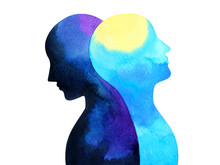
Many people still confuse mental health with mental illness, but they are not the same. Everyone has mental health—just like we all have physical health—but not everyone experiences mental illness.
What is Mental Health?
Mental health refers to our overall psychological well-being. It encompasses how we cope with daily stressors, maintain relationships, make decisions, and feel about ourselves. It is not just the absence of mental illness; it also includes positive traits such as resilience, emotional regulation, and life satisfaction.
Teixeira et al. (2025) emphasize that mental health must be seen as “a dynamic state of internal equilibrium,” which supports effective functioning in society, and is distinct from diagnosable mental disorders.
What is Mental Illness?
Mental illness refers to clinical conditions such as depression, anxiety disorders, bipolar disorder, and schizophrenia, among others. These are diagnosable mental health conditions that often require specific treatment, including therapy, medication, or both.
Nguyen et al. (2025) found that even among healthcare professionals, there remains confusion between these two terms, leading to inadequate preventive strategies and perpetuating stigma.
Prevention, Maintenance, and Growth
Just like we eat healthy foods and exercise to maintain our physical health, we must actively care for our mental health. Mental health promotion includes:
- Practicing mindfulness and reflection
- Building strong social connections
- Engaging in physical activity
- Seeking help when needed—early!
According to Fiorillo & De Giorgi (2024), proactive public health policies should target social determinants like income, education, and housing to build resilience and reduce risks for mental illness.
Challenging the Stigma
The stigma around mental illness often prevents people from seeking help. But framing mental health as universal and maintainable can shift this perspective.
A recent scoping review by Plackett et al. (2024) found that social media campaigns that emphasize mental health as everyday well-being (not illness alone) significantly improve attitudes and help-seeking behavior.
Everyone Has Mental Health—Just Like Physical Health
Let’s normalize talking about emotions and seeking support—not just in crisis, but as a routine part of life.
📌 Key Takeaways:
- Mental health is for everyone; mental illness is not.
- Promoting mental health is about building well-being, not just treating disorders.
- Reducing stigma starts with education and open conversations.
- Prevention, just like in physical health, can significantly reduce mental health issues.
References:
Fiorillo, A., & De Giorgi, S. (2024). Social Determinants of Mental Health. Springer. https://raggeduniversity.co.uk/wp-content/uploads/2025/02/1_x_Andrea-Fiorillo-editor-Serafino-De-Giorgi-editor-Social-Determinants-of-Mental-Health-Sustainable-Development-Goals-Series-Springer-2024_compressed.pdf
Nguyen, M.V., Khanh, H.D., & Phan, C.T. (2025). Investigating the impacts of psychological safety climate on mental ill health. Engineering, Construction and Architectural Management. https://www.emerald.com/insight/content/doi/10.1108/ECAM-11-2024-1576/full/html
Plackett, R., Steward, J.M., Kassianos, A.P., Duenger, M. (2024). The effectiveness of social media campaigns in improving knowledge and attitudes towards mental health and help-seeking. JMIR Preprints. https://s3.ca-central-1.amazonaws.com/assets.jmir.org/assets/preprints/preprint-68124-submitted.pdf
Teixeira, A.I., Martins, S., Lima, S., Pinto, F., & Morgado, T. (2025). A Mixed Methods Approach to Understanding Mental Health Literacy Among University Health Students. Healthcare, 13(7), 724. https://www.mdpi.com/2227-9032/13/7/724
