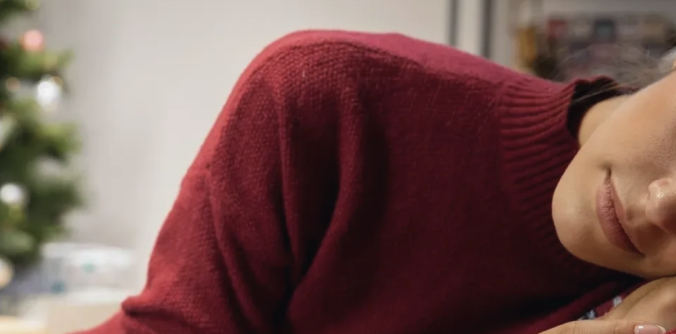
Zelda: I was hoping to talk a little bit about grief losing my dad. My partner and I went to visit his family this weekend, which brought up a lot of emotions. And just maybe the next couple months are usually pretty rough, which starts right about now. My birthday is next week; and then of course he died during the holidays. It’s a pretty heavy time, you know.
Dr. Ferrer: Tell me about your dad, Zelda. What comes up in your memory?
Zelda proceeded to share that as she and her boyfriend were driving up to visit his family, the music that was playing in the car were songs her father enjoyed. Consequently, other stories of her childhood, pleasant and unpleasant, have surfaced.
Zelda: Once we got there to his family, it’s lovely because he still has the three generations of men. And that’s not something that we’ve ever had in my family. My dad’s father died really young as well. My mom’s father died when he was a baby. So as much as I enjoyed hanging out with them, it got a little bit hard.
Dr. Ferrer: And what feelings came up as you were experiencing or having those thoughts?
Zelda: Sadness…a little bit of frustration in there too, just because my relationship with my dad was very complicated.
Dr. Ferrer: I’m curious about the circumstances leading up to your father’s passing.
Zelda: It was a little rough. My dad had a hereditary blood clotting disorder. He had a couple of genetic issues. He also had another one having to do with the spinal cord that was unrelated. So, there was a period in time where my dad first found out about this because he got a blood clot in his leg that was really bad and he went to the hospital Thank God, they were able to get them on blood thinners, but my dad was also an alcoholic, and he could not or chose not to give up drinking.
She proceeded to tell additional information about the events leading to his father’s death. He was only 47 years old.
Zelda: At 21 years old and my brother was almost 18 years old, we had to make the decision to take off the life support. There was a lot of guilt in that. After he died, the rest of it was just kind of a blur; just trying to get his house organized and getting memorial services together. He died on December 10. It’s a pretty hard time here, even so many years later and I also turn 30 next week, I just didn’t envision ever celebrating him without him.
I believe that he probably directly contributed to his own demise. And that was pretty hard pill to swallow. So, when my mom does stupid s**t, like not wearing her sleep apnea mask and gives herself a f***ing, you know, a mini stroke…
Dr. Ferrer: You are more sensitive to, perhaps even triggering the anger because you’ve already lost one.
Zelda: Yeah. I feel so many mixed emotions. It gives me a lot of contexts of my childhood and why my parents were the way that they were. I couldn’t do anything.
Dr. Ferrer: Yes, as if your hands are tied and someone in front of you is tortured and helpless. You couldn’t do anything about your parents’ health and lifestyle choices because they’re theirs. That’s their responsibility. But you see in front of you how they cared about their body. You can express your opinion, but you can’t do anything about the actions they take. It’s not in your control, and to feel that lack of control is always frightening or horrifying for us witnessing the pain and suffering of others.
Zelda: Yes, there’s that sense of just this frustration, an enormous sense of frustration.
Dr. Ferrer: When I asked you to retell your story about your father, I was deliberate. I appreciate deeply your audacity to share what can be difficult experiences for one to have to go through. And you’ve taken the strength, the courage to describe what you remember, to retell what you experienced. What are the thoughts and feelings about this process, then?
Zelda: Part of it feels like a relief, like letting air out of a balloon. I’m not even sad for myself anymore, but I’m sad for him. I’m sad for both of my parents. I’m sad for my dad. You can’t make somebody see the reasons that they deserve to be here. That’s what I think about a lot. He was a college athlete, but he’s been sick forever. He got sick when I was five. So, he’s been sick for 15 years. At that point. He had the opportunity to come to terms with it. But, I don’t know that he ever did not. My heart just aches, it’s just so sad. It feels like you know, we weren’t good enough for him to try to live, to do his best.
More instances of catharsis took place during the session. In psychotherapy, catharsis refers to the release and emotional purging of repressed or pent-up feelings and emotions. The idea is that by expressing and experiencing deeply held emotions, individuals can achieve a sense of relief, clarity, and emotional purification. This process is believed to contribute to psychological healing and personal growth. Catharsis can take various forms, including verbal expression (such as talking about one’s feelings), non-verbal expression (crying, screaming, or other emotional outlets), or creative expression (art, music, writing).
Talking about grief can, therefore, be cathartic. Telling stories about a deceased loved one can be helpful in the grief process for several reasons: preserving memories, honoring the deceased, connecting with others, normalizing grief, finding meaning, and creating a narrative of healing.
Still, it’s important to note that grieving is a highly personal and individual process, and different people may find comfort in different ways. While some may benefit from sharing stories, others may find solace through different forms of expression or support. Likewise, consider that grieving is not just someone’s process from a recent loss. Some people may continue to grieve for a longer period, while others have short episodes of grieving, particularly during special calendar events, such as the winter holidays.
During the holidays, give oneself the space to grieve. Seek support from others such as friends or a professional to talk the grief through and prioritize self-care.
Notice & Disclaimer: The information provided in this newsletter is not intended to be a substitute for professional medical or mental health advice. If you are experiencing any mental health issues, please seek professional help. The author of this blog is not liable for any damages or injuries that may result from the use of the information provided here.
When applicable, the names, gender identification, location and/or other identifiable characteristics have been modified to maintain privacy and confidentiality; whilst, still maintaining the integrity of their stories and narratives.
Read more from Rizaldy R. Ferrer, Ph.D.
